Fifteen-plus years of BC mortgage experience, distilled into practical writing on buying, renewing, refinancing, and building wealth through real estate.
Your 4% Savings Account Is Costing You Money in an Emergency
A 53-year-old consultant in Surrey moved her emergency fund to a digital-only bank last spring for a promotional rate of 5.25%. When her water heater failed in July, the transfer to her chequing account took four business days. She paid the plumber on a credit card at 21.99% and carried the balance for three weeks while the money cleared.
The savings account paid her $112 in interest over those six months. The delayed access cost her $47 in credit card interest she wouldn't have paid if the cash had been in her regular account. The net gain was $65. She spent four hours on hold with customer service trying to expedite the transfer. At her billing rate, the trade wasn't close.
The Tax Trap Nobody Mentions
If you're earning over $252,752 in BC in 2026, your marginal tax rate hits 53.5%. A 4% savings account becomes a 1.86% after-tax return. Inflation runs at 3%. Your emergency fund is losing purchasing power every month despite the advertised rate.
The arithmetic is worse if you're self-employed and treating part of that balance as a tax reserve. CRA doesn't care that you thought you were earning 4%. They care about the net amount available when your instalment is due. If half your "emergency fund" is actually September's GST remittance, the interest you're earning on it vanishes the moment you write the cheque.
A TFSA holding the same balance earns tax-free. The 2026 contribution limit is $7,000, with a lifetime cap of $109,000 for anyone who's never contributed. If your emergency fund is $30,000 and you've got unused TFSA room, leaving it in a taxable account is a choice to pay tax on income that could be sheltered.
The Promotional Rate Treadmill
That 5% teaser at a digital challenger bank reverts to 2.1% after five months. Most people don't notice the drop until the following January when they're doing their taxes. By then, they've been earning the base rate for seven months. The blended return for the year was 3.1%, not 5%.
Moving money between institutions every quarter to chase an extra 50 basis points creates friction. In an actual emergency, friction is cost. A digital bank with no branches and a two-day hold on inbound transfers is slower than your regular chequing account. The rate premium doesn't compensate for the delay when you need the cash immediately.
EQ Bank's high-balance savings account, one of the most competitive in Canada, was paying 2.75% as of mid-August 2026. That's real, not promotional. But it's a savings account, which means any transfer out requires an EFT to another institution. If your car breaks down on a Friday afternoon, you're not accessing that money until Tuesday.
Where Emergency Money Actually Belongs
An emergency fund has one job: be there when something breaks. Growth is secondary. Accessibility is primary.
For a true emergency reserve, the Big Five chequing account with instant Interac access beats the high-yield savings account at a digital-only bank. The rate is worse. The liquidity is better. You're paying a premium for immediate availability, and that premium is worth it.
If your fund is large enough to split, park three months' expenses in chequing for speed, and the rest in a TFSA holding a high-interest savings ETF or money market fund. The TFSA shields the tax. The chequing account shields the timing risk.
For self-employed professionals, keeping tax reserves in the same account as personal emergency money is a category error. CRA doesn't negotiate deadlines because you had an expensive month. Separate accounts, separate purposes.
The 4% rate isn't the problem. Chasing it at the cost of access and tax efficiency is. If the account takes four days to release your money, it's not an emergency fund. It's a slightly-higher-yield holding pen that fails when you actually need it.


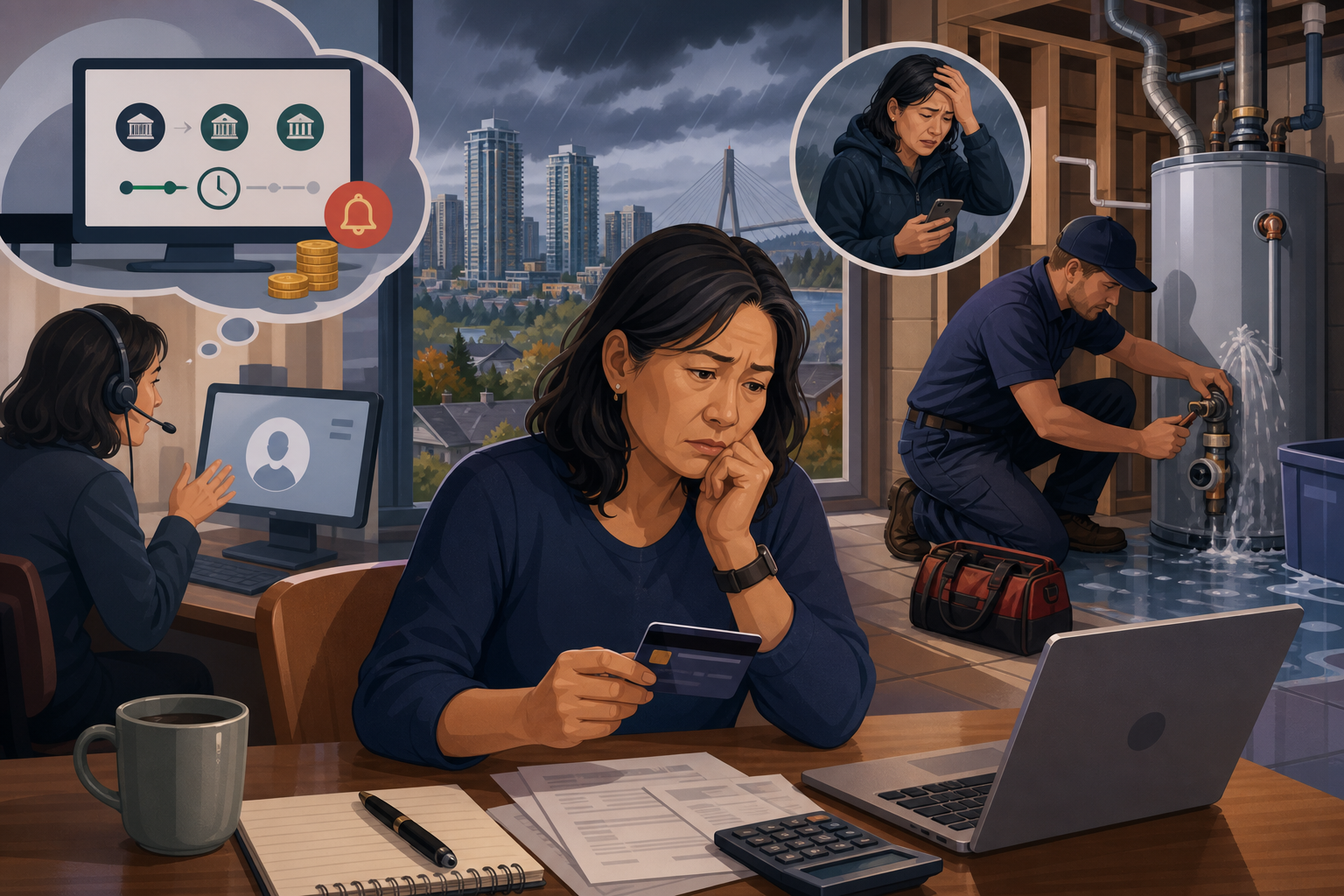

A 53-year-old consultant in Surrey moved her emergency fund to a digital-only bank last spring for a promotional rate of 5.25%. When her water heater failed in July, the transfer to her chequing account took four business days. She paid the plumber on a credit card at 21.99% and carried the balance for three weeks while the money cleared.
The savings account paid her $112 in interest over those six months. The delayed access cost her $47 in credit card interest she wouldn't have paid if the cash had been in her regular account. The net gain was $65. She spent four hours on hold with customer service trying to expedite the transfer. At her billing rate, the trade wasn't close.
The Tax Trap Nobody Mentions
If you're earning over $252,752 in BC in 2026, your marginal tax rate hits 53.5%. A 4% savings account becomes a 1.86% after-tax return. Inflation runs at 3%. Your emergency fund is losing purchasing power every month despite the advertised rate.
The arithmetic is worse if you're self-employed and treating part of that balance as a tax reserve. CRA doesn't care that you thought you were earning 4%. They care about the net amount available when your instalment is due. If half your "emergency fund" is actually September's GST remittance, the interest you're earning on it vanishes the moment you write the cheque.
A TFSA holding the same balance earns tax-free. The 2026 contribution limit is $7,000, with a lifetime cap of $109,000 for anyone who's never contributed. If your emergency fund is $30,000 and you've got unused TFSA room, leaving it in a taxable account is a choice to pay tax on income that could be sheltered.
The Promotional Rate Treadmill
That 5% teaser at a digital challenger bank reverts to 2.1% after five months. Most people don't notice the drop until the following January when they're doing their taxes. By then, they've been earning the base rate for seven months. The blended return for the year was 3.1%, not 5%.
Moving money between institutions every quarter to chase an extra 50 basis points creates friction. In an actual emergency, friction is cost. A digital bank with no branches and a two-day hold on inbound transfers is slower than your regular chequing account. The rate premium doesn't compensate for the delay when you need the cash immediately.
EQ Bank's high-balance savings account, one of the most competitive in Canada, was paying 2.75% as of mid-August 2026. That's real, not promotional. But it's a savings account, which means any transfer out requires an EFT to another institution. If your car breaks down on a Friday afternoon, you're not accessing that money until Tuesday.
Where Emergency Money Actually Belongs
An emergency fund has one job: be there when something breaks. Growth is secondary. Accessibility is primary.
For a true emergency reserve, the Big Five chequing account with instant Interac access beats the high-yield savings account at a digital-only bank. The rate is worse. The liquidity is better. You're paying a premium for immediate availability, and that premium is worth it.
If your fund is large enough to split, park three months' expenses in chequing for speed, and the rest in a TFSA holding a high-interest savings ETF or money market fund. The TFSA shields the tax. The chequing account shields the timing risk.
For self-employed professionals, keeping tax reserves in the same account as personal emergency money is a category error. CRA doesn't negotiate deadlines because you had an expensive month. Separate accounts, separate purposes.
The 4% rate isn't the problem. Chasing it at the cost of access and tax efficiency is. If the account takes four days to release your money, it's not an emergency fund. It's a slightly-higher-yield holding pen that fails when you actually need it.
Sources
Read Next
Housing Targets Mean Little Without the Trades Workers to Build Them
200 Basis Points or 2%: What OSFI's Qualifying Rate Update Means for You
Canada's U.S. Export Dependency Dropped 3.7 Points Since Your Last Tariff Risk Check
Capital Power's Tariff Shield Holds, But Rate Assumptions Have Shifted: A Portfolio Reality Check for 2026