Fifteen-plus years of BC mortgage experience, distilled into practical writing on buying, renewing, refinancing, and building wealth through real estate.
Why Capital Power climbed while tariff-exposed TSX stocks fell
Capital Power Corp. climbed while manufacturers stumbled, and the divergence came down to one structural fact: electricity doesn't cross a border in a shipping container.
The utility emerged as a standout gainer in a week when tariff anxiety sent export-heavy TSX names lower. National Bank Financial flagged the company in recent analysis, pointing to its defensive position against U.S. trade volatility. The reason is simpler than it sounds. Capital Power generates electricity in Alberta and sells it under long-term contracts to customers in Alberta. There is no customs form. There is no truck idling at a checkpoint. The product moves through wires, and the wires stay inside Canada.
That matters now because the TSX remains vulnerable to shifts in U.S. trade policy in ways that can move entire sectors in a single session. Roughly 50% of the index's weighting sits in Financials and Energy, both exposed to cross-border flows. Steel, autos, and manufacturing face direct tariff risk under Section 232 and 301 measures. When tariff rhetoric escalates, institutional money rotates. It doesn't leave Canadian equities entirely. It moves into names whose revenue models don't require physical goods leaving the country.
Why utilities became the macro hedge
National Bank's framing of Capital Power as a "tariff shield" reflects a broader institutional shift. Domestic-focused utilities and telecom are being used as hedges against the risk of tit-for-tat trade barriers. A company operating under fixed-price power purchase agreements with inflation-adjustment clauses avoids both sides of the tariff problem: it faces no border costs on inputs, and it loses no margin when retaliatory measures hit exports.
The utility sector is currently yielding in the 4.5% to 6% range across top-tier Canadian names. That dividend buffer gives the stocks a price floor even when broader equity markets are choppy. Capital Power's renewable and natural gas mix insulates it from carbon-tax swings and import-cost spikes that older coal-heavy utilities still face.
RBC Capital Markets recently adjusted its "Best Ideas" list with a similar lens. The bank's current strategy prioritizes stocks with strong free cash flow yield over pure growth plays. The list typically features 30 names at any given time, and recent additions lean toward low beta and high earnings visibility. RBC's move signals a shift from "value", meaning cheap stocks, to "quality," meaning stocks with low debt and wide moats. In a higher-for-longer interest-rate environment, that distinction compounds. A company with predictable cash flows and limited refinancing needs keeps its valuation when rates stay elevated. A company betting on volume growth funded by variable-rate debt sees its valuation compressed as debt service rises.
The limits of the trade
Geography-as-moat works until it doesn't. Capital Power and similar utilities remain sensitive to Bank of Canada rate decisions, which operate on an 18 to 24 month transmission lag. A "safe" stock in September 2026 can become a laggard in March 2027 if the central bank holds rates higher than the market expected. Even a domestic utility needs turbines, solar panels, and transformers, most of which are imported. Prolonged global tariffs will eventually inflate maintenance capital expenditure, eating into the free cash flow that justifies today's premium valuation.
The other risk is crowding. When National Bank, RBC, and others point to the same defensive plays, the valuation premium stretches. If trade tensions ease suddenly, if, for example, the 2026 USMCA review produces a framework that reduces tariff uncertainty, capital will rotate back into cyclicals fast. Investors will exit the stocks they held as shelters and move back into the sectors they avoided.
Still, in a market where $3.6 billion CAD in daily cross-border trade sits under the shadow of universal baseline tariff proposals, a company that generates power in Alberta and sells to Alberta customers operates with a real advantage over a steelmaker shipping billets to Michigan.


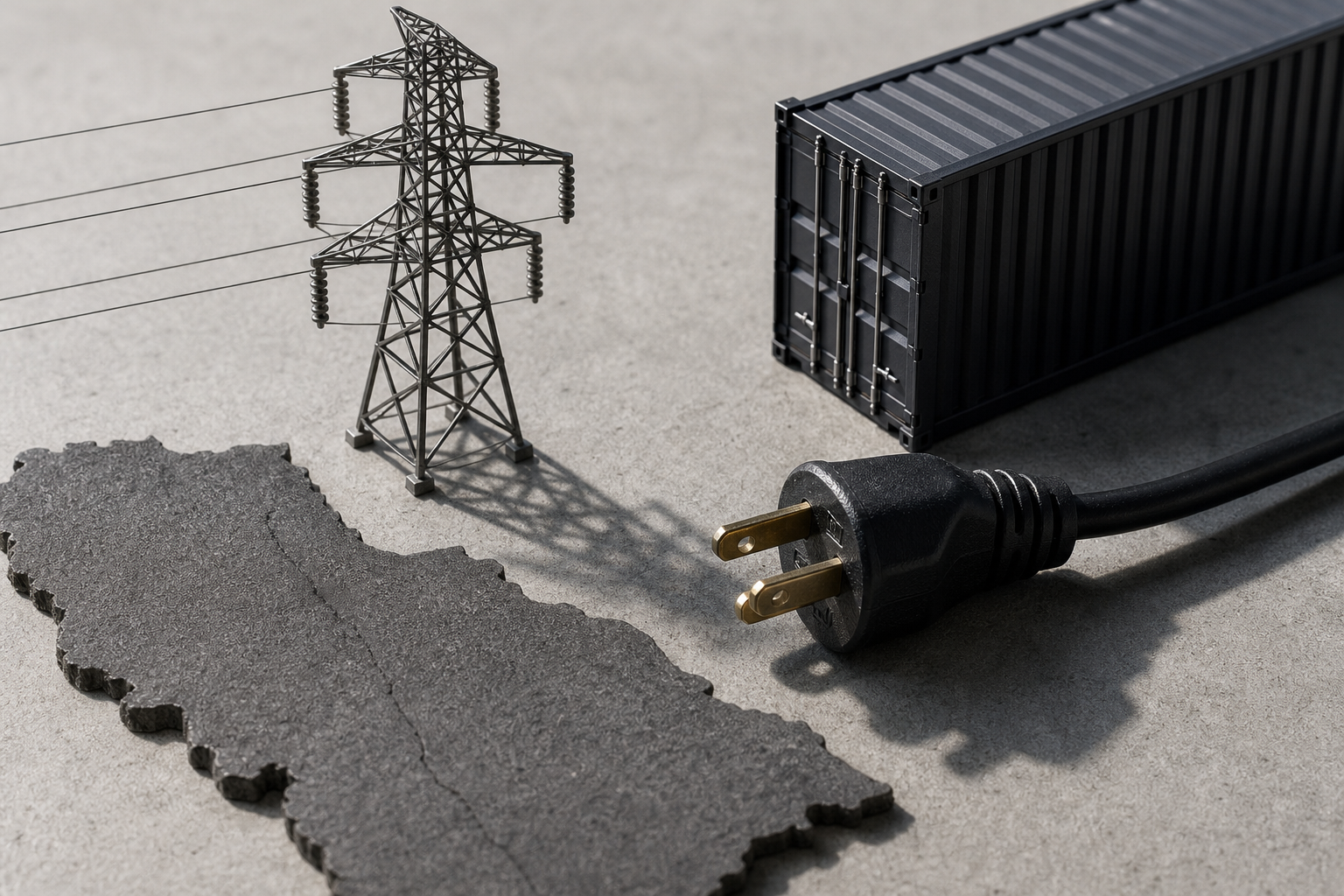

Capital Power Corp. climbed while manufacturers stumbled, and the divergence came down to one structural fact: electricity doesn't cross a border in a shipping container.
The utility emerged as a standout gainer in a week when tariff anxiety sent export-heavy TSX names lower. National Bank Financial flagged the company in recent analysis, pointing to its defensive position against U.S. trade volatility. The reason is simpler than it sounds. Capital Power generates electricity in Alberta and sells it under long-term contracts to customers in Alberta. There is no customs form. There is no truck idling at a checkpoint. The product moves through wires, and the wires stay inside Canada.
That matters now because the TSX remains vulnerable to shifts in U.S. trade policy in ways that can move entire sectors in a single session. Roughly 50% of the index's weighting sits in Financials and Energy, both exposed to cross-border flows. Steel, autos, and manufacturing face direct tariff risk under Section 232 and 301 measures. When tariff rhetoric escalates, institutional money rotates. It doesn't leave Canadian equities entirely. It moves into names whose revenue models don't require physical goods leaving the country.
Why utilities became the macro hedge
National Bank's framing of Capital Power as a "tariff shield" reflects a broader institutional shift. Domestic-focused utilities and telecom are being used as hedges against the risk of tit-for-tat trade barriers. A company operating under fixed-price power purchase agreements with inflation-adjustment clauses avoids both sides of the tariff problem: it faces no border costs on inputs, and it loses no margin when retaliatory measures hit exports.
The utility sector is currently yielding in the 4.5% to 6% range across top-tier Canadian names. That dividend buffer gives the stocks a price floor even when broader equity markets are choppy. Capital Power's renewable and natural gas mix insulates it from carbon-tax swings and import-cost spikes that older coal-heavy utilities still face.
RBC Capital Markets recently adjusted its "Best Ideas" list with a similar lens. The bank's current strategy prioritizes stocks with strong free cash flow yield over pure growth plays. The list typically features 30 names at any given time, and recent additions lean toward low beta and high earnings visibility. RBC's move signals a shift from "value", meaning cheap stocks, to "quality," meaning stocks with low debt and wide moats. In a higher-for-longer interest-rate environment, that distinction compounds. A company with predictable cash flows and limited refinancing needs keeps its valuation when rates stay elevated. A company betting on volume growth funded by variable-rate debt sees its valuation compressed as debt service rises.
The limits of the trade
Geography-as-moat works until it doesn't. Capital Power and similar utilities remain sensitive to Bank of Canada rate decisions, which operate on an 18 to 24 month transmission lag. A "safe" stock in September 2026 can become a laggard in March 2027 if the central bank holds rates higher than the market expected. Even a domestic utility needs turbines, solar panels, and transformers, most of which are imported. Prolonged global tariffs will eventually inflate maintenance capital expenditure, eating into the free cash flow that justifies today's premium valuation.
The other risk is crowding. When National Bank, RBC, and others point to the same defensive plays, the valuation premium stretches. If trade tensions ease suddenly, if, for example, the 2026 USMCA review produces a framework that reduces tariff uncertainty, capital will rotate back into cyclicals fast. Investors will exit the stocks they held as shelters and move back into the sectors they avoided.
Still, in a market where $3.6 billion CAD in daily cross-border trade sits under the shadow of universal baseline tariff proposals, a company that generates power in Alberta and sells to Alberta customers operates with a real advantage over a steelmaker shipping billets to Michigan.
Sources
Read Next
Housing Targets Mean Little Without the Trades Workers to Build Them
200 Basis Points or 2%: What OSFI's Qualifying Rate Update Means for You
Canada's U.S. Export Dependency Dropped 3.7 Points Since Your Last Tariff Risk Check
Capital Power's Tariff Shield Holds, But Rate Assumptions Have Shifted: A Portfolio Reality Check for 2026