Fifteen-plus years of BC mortgage experience, distilled into practical writing on buying, renewing, refinancing, and building wealth through real estate.
Trump's tariff pressure backfired: Carney's $20-billion retaliation announced in August united Canada instead of forcing concessions
Mark Carney stood in the House of Commons on a Tuesday afternoon in September 2026 and announced C$27.6 billion in counter-tariffs on American goods. The figure, roughly US$20 billion at current exchange rates, matched the scale of Donald Trump's most recent salvo against Canadian exports. What happened next surprised Washington. Carney's approval ratings climbed.
The rally-round-the-flag effect isn't subtle. Polling conducted in the week following the retaliation announcement shows a meaningful uptick in support for the Prime Minister specifically on his handling of the trade file, reversing months of erosion on domestic issues. The dynamic confounds the core assumption behind Trump's trade strategy: that economic pain splits the target country's political coalition and forces capitulation. In Canada's case, the pain appears to be functioning as glue.
The miscalculation in Trump's playbook
Trump's tariff approach presumes asymmetric leverage. The United States is Canada's largest trading partner, absorbing roughly 66-73% (most recent: 66.3% in July 2026, or 68-73% in H1 2026) of Canadian exports. Daily cross-border goods trade sits at C$3.6 billion. The arithmetic suggests Canada has more to lose in an escalatory spiral, and therefore more reason to fold early.
But arithmetic doesn't account for political psychology. When a larger power applies visible coercion, smaller nations often respond tribally rather than economically. Carney, a former central banker with credibility on fiscal and monetary stability, frames retaliation as institutional defence. The message to voters is not "we're picking a fight," but "we're refusing to be bullied."
The counter-tariffs themselves are surgically targeted. Canada's C$27.6 billion list, announced on August 25, 2026, by the Department of Finance, focuses on goods produced in politically sensitive U.S. states, swing districts where congressional representatives face tight races. The strategy mirrors Canada's historical playbook during the 2018 steel and aluminum disputes, when bourbon, motorcycles, and orange juice were hit to maximize pressure on specific lawmakers. This time, the list includes steel (subject to a 50% surcharge as of early September) and a range of agricultural and manufactured goods designed to generate constituent complaints that flow upward to Capitol Hill.
The USMCA review looms
The timing magnifies the stakes. The Canada-United States-Mexico Agreement is due for its scheduled six-year review in 2026, creating an unusually high-stakes backdrop for the current dispute. Supply chains in automotive and aerospace, sectors where components cross the border multiple times during assembly, are particularly exposed. A prolonged tariff war doesn't just raise costs; it introduces unpredictability that makes long-term capital allocation nearly impossible for manufacturers operating on both sides of the 49th parallel.
Trump's calculation appears to be that this vulnerability forces Canada to concede before the review process formally begins. Carney's counter-calculation is that giving ground under open coercion damages Canada's negotiating position more than short-term economic pain does.
The consumer double-tax
Neither side escapes the inflationary consequence. Canadian businesses importing the targeted U.S. goods face higher input costs, which flow through to consumers as higher prices. The Bank of Canada, already navigating a narrow path on inflation targets for 2026-2027, now has to manage cost-push pressures from trade policy rather than demand fundamentals. American consumers face the mirror problem: a 50% tariff on Canadian steel raises costs for U.S. manufacturers who depend on it, and those costs get passed downstream.
The political question is which electorate absorbs the pain longer. Trump's wager is that Canadian unity fractures first, especially if layoffs emerge in Ontario's manufacturing corridor. Carney's wager is that visible retaliation satisfies the domestic demand for action and buys time to accelerate trade diversification toward Europe under CETA and the Indo-Pacific under CPTPP.
So far, the data favours Carney. But polling in September is not the same as employment figures in January. If the tariffs persist into 2027, the rally-round-the-flag effect will compete with the reality of shuttered plants and rising grocery bills. The united front holds for now. Whether it holds through a recession is the real test.


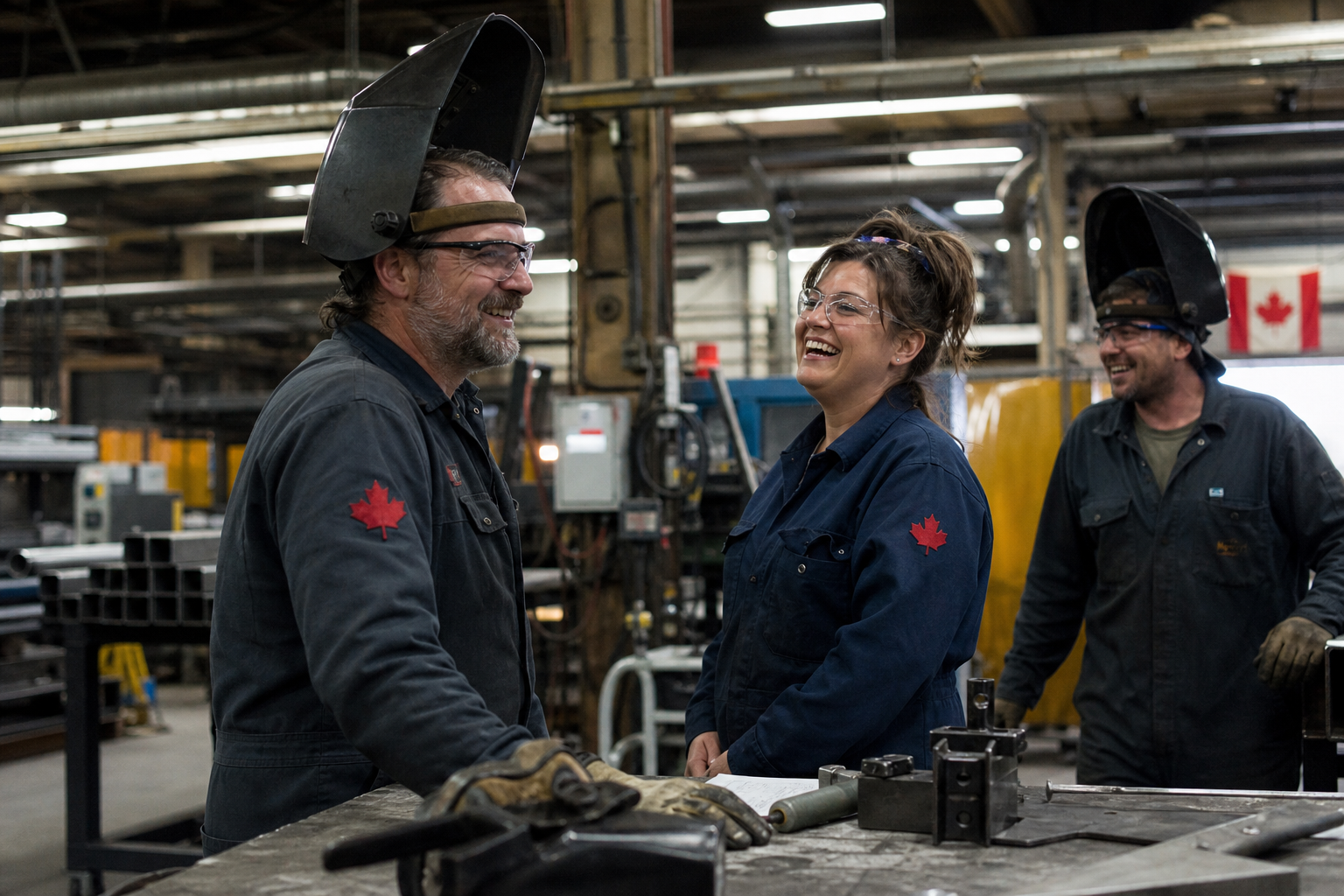

Mark Carney stood in the House of Commons on a Tuesday afternoon in September 2026 and announced C$27.6 billion in counter-tariffs on American goods. The figure, roughly US$20 billion at current exchange rates, matched the scale of Donald Trump's most recent salvo against Canadian exports. What happened next surprised Washington. Carney's approval ratings climbed.
The rally-round-the-flag effect isn't subtle. Polling conducted in the week following the retaliation announcement shows a meaningful uptick in support for the Prime Minister specifically on his handling of the trade file, reversing months of erosion on domestic issues. The dynamic confounds the core assumption behind Trump's trade strategy: that economic pain splits the target country's political coalition and forces capitulation. In Canada's case, the pain appears to be functioning as glue.
The miscalculation in Trump's playbook
Trump's tariff approach presumes asymmetric leverage. The United States is Canada's largest trading partner, absorbing roughly 66-73% (most recent: 66.3% in July 2026, or 68-73% in H1 2026) of Canadian exports. Daily cross-border goods trade sits at C$3.6 billion. The arithmetic suggests Canada has more to lose in an escalatory spiral, and therefore more reason to fold early.
But arithmetic doesn't account for political psychology. When a larger power applies visible coercion, smaller nations often respond tribally rather than economically. Carney, a former central banker with credibility on fiscal and monetary stability, frames retaliation as institutional defence. The message to voters is not "we're picking a fight," but "we're refusing to be bullied."
The counter-tariffs themselves are surgically targeted. Canada's C$27.6 billion list, announced on August 25, 2026, by the Department of Finance, focuses on goods produced in politically sensitive U.S. states, swing districts where congressional representatives face tight races. The strategy mirrors Canada's historical playbook during the 2018 steel and aluminum disputes, when bourbon, motorcycles, and orange juice were hit to maximize pressure on specific lawmakers. This time, the list includes steel (subject to a 50% surcharge as of early September) and a range of agricultural and manufactured goods designed to generate constituent complaints that flow upward to Capitol Hill.
The USMCA review looms
The timing magnifies the stakes. The Canada-United States-Mexico Agreement is due for its scheduled six-year review in 2026, creating an unusually high-stakes backdrop for the current dispute. Supply chains in automotive and aerospace, sectors where components cross the border multiple times during assembly, are particularly exposed. A prolonged tariff war doesn't just raise costs; it introduces unpredictability that makes long-term capital allocation nearly impossible for manufacturers operating on both sides of the 49th parallel.
Trump's calculation appears to be that this vulnerability forces Canada to concede before the review process formally begins. Carney's counter-calculation is that giving ground under open coercion damages Canada's negotiating position more than short-term economic pain does.
The consumer double-tax
Neither side escapes the inflationary consequence. Canadian businesses importing the targeted U.S. goods face higher input costs, which flow through to consumers as higher prices. The Bank of Canada, already navigating a narrow path on inflation targets for 2026-2027, now has to manage cost-push pressures from trade policy rather than demand fundamentals. American consumers face the mirror problem: a 50% tariff on Canadian steel raises costs for U.S. manufacturers who depend on it, and those costs get passed downstream.
The political question is which electorate absorbs the pain longer. Trump's wager is that Canadian unity fractures first, especially if layoffs emerge in Ontario's manufacturing corridor. Carney's wager is that visible retaliation satisfies the domestic demand for action and buys time to accelerate trade diversification toward Europe under CETA and the Indo-Pacific under CPTPP.
So far, the data favours Carney. But polling in September is not the same as employment figures in January. If the tariffs persist into 2027, the rally-round-the-flag effect will compete with the reality of shuttered plants and rising grocery bills. The united front holds for now. Whether it holds through a recession is the real test.
Sources
Read Next
Housing Targets Mean Little Without the Trades Workers to Build Them
200 Basis Points or 2%: What OSFI's Qualifying Rate Update Means for You
Canada's U.S. Export Dependency Dropped 3.7 Points Since Your Last Tariff Risk Check
Capital Power's Tariff Shield Holds, But Rate Assumptions Have Shifted: A Portfolio Reality Check for 2026