Fifteen-plus years of BC mortgage experience, distilled into practical writing on buying, renewing, refinancing, and building wealth through real estate.
Toronto's 'Cool-Down' Is Actually a Supply Crunch, and That Changes Everything for Buyers
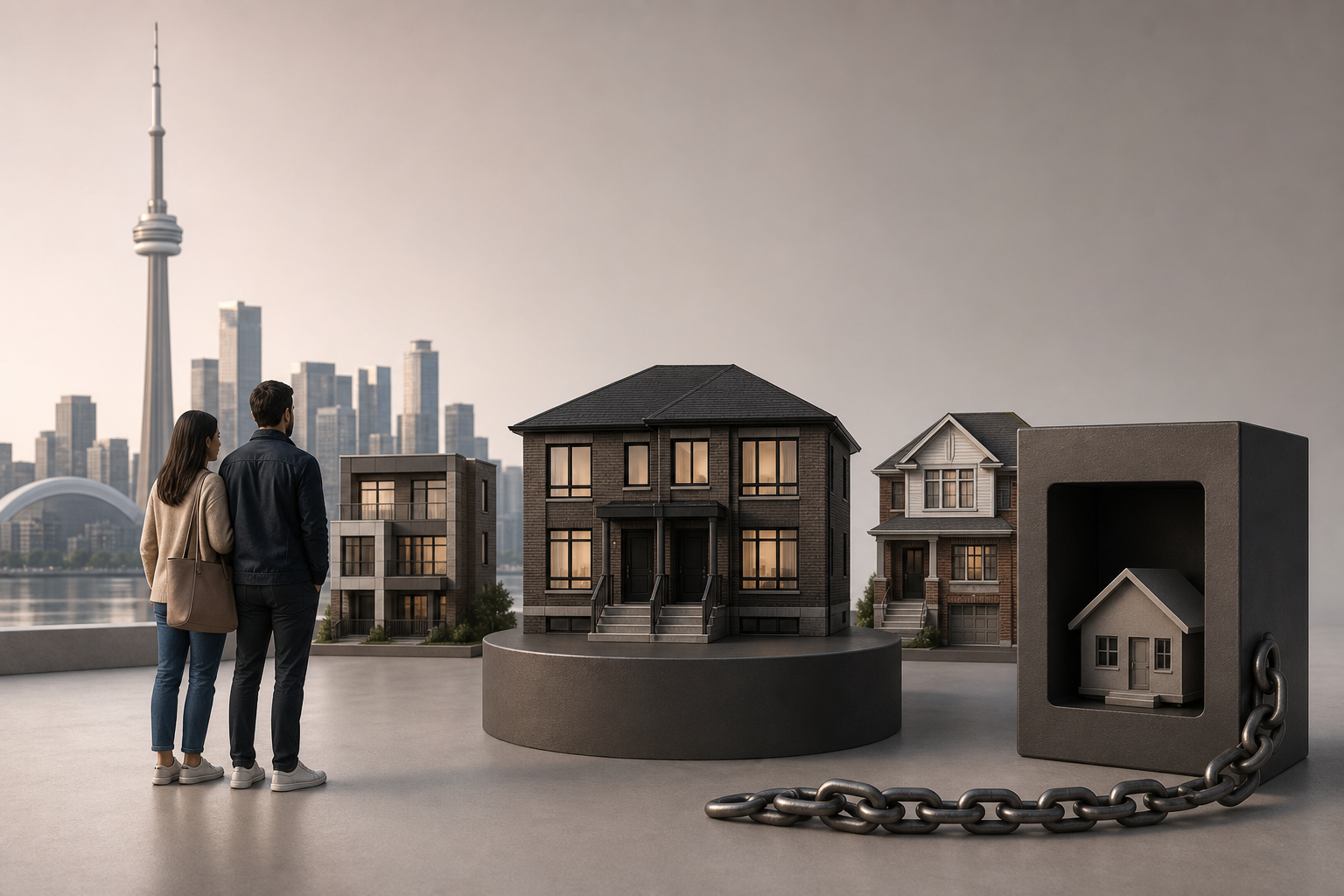
Semi-detached homes in the GTA are trading for $964,922 on average as of July 2026, the first time in three years that segment has fallen below the million-dollar mark. That number matters because of mortgage insurance thresholds, yes, but it also matters because it's masking what's actually happening in Toronto's housing market right now. Sales are down. Prices are sliding. And everyone is calling it a cool-down. But the inventory numbers tell a different story.
The Missing Supply
New listings dropped hard in July 2026. Not softened. Dropped. The decline came alongside falling sales, which is the opposite of how a normal cool-down works. In a typical downturn, inventory swells because sellers panic or because life events force transactions. You get more supply chasing fewer buyers, and prices compress. That's Econ 101. But Toronto sellers aren't flooding the market. They're pulling back. And that creates a very different set of conditions for anyone trying to time a purchase.
The word for this is a supply crunch, not a cool-down. A cool-down implies the market is catching its breath and will normalize. A supply crunch means the people who own homes are choosing not to sell, and that decision changes the pricing floor, the negotiation leverage, and how long this softness actually lasts.
Where the Pressure Lands
Semi-detached homes took a 6% year-over-year sales hit and a 7.4% price drop. Townhouses fell 2.7% on sales volume. These are the asset classes families buy when they outgrow condos but can't afford detached houses in the 416. The "missing middle" is called that because it was undersupplied for a decade, and now it's the segment absorbing the most price volatility. Meanwhile, detached homes and condos have stayed relatively stable, which suggests the pain is concentrated in a narrow band where first-time movers and young families compete.
That $964,922 average for semis is below the $1 million threshold, which opens the door to insured mortgages with as little as 5% down instead of the mandatory 20%. On paper, that's an affordability unlock. In practice, it depends entirely on what rates and stress tests look like when you're actually signing. A cheaper sticker price helps, but if carrying costs haven't come down proportionally, the math still doesn't work for most buyers in their early thirties.
Why Sellers Are Holding
The absence of new listings is the tell. Sellers aren't being forced out. Most people who bought between 2017 and 2021 locked in mortgage rates under 2.5%. Selling now means porting that rate to a new property, if the lender allows it, or refinancing at 2026 rates that are multiples higher. That lock-in effect is real and it's structural. It's not about sentiment. It's about arithmetic.
The other part is price expectation. If you bought a semi in 2021 for $1.1 million and the market is now at $964k, listing means accepting a nominal loss or waiting it out. Most people who aren't forced to move will wait. That waiting creates the supply squeeze, which in turn prevents prices from falling further. It's a feedback loop, and it means the market can stay tight even while looking soft.
What This Means for Buyers
If you're waiting for a flood of inventory to give you options and negotiating room, you're waiting for something the data doesn't support. The supply crunch means any uptick in buyer confidence, a rate cut, a policy shift, a change in sentiment, will hit a market with no inventory buffer. Competition comes back fast when there are twelve buyers and four listings.
The opportunity, if there is one, is in the narrow window where semis are below $1 million and most buyers are still sitting on the sidelines. That won't last. It's not a structural repricing. It's a moment of low liquidity in a constrained market, and those moments close quickly.



Semi-detached homes in the GTA are trading for $964,922 on average as of July 2026, the first time in three years that segment has fallen below the million-dollar mark. That number matters because of mortgage insurance thresholds, yes, but it also matters because it's masking what's actually happening in Toronto's housing market right now. Sales are down. Prices are sliding. And everyone is calling it a cool-down. But the inventory numbers tell a different story.
The Missing Supply
New listings dropped hard in July 2026. Not softened. Dropped. The decline came alongside falling sales, which is the opposite of how a normal cool-down works. In a typical downturn, inventory swells because sellers panic or because life events force transactions. You get more supply chasing fewer buyers, and prices compress. That's Econ 101. But Toronto sellers aren't flooding the market. They're pulling back. And that creates a very different set of conditions for anyone trying to time a purchase.
The word for this is a supply crunch, not a cool-down. A cool-down implies the market is catching its breath and will normalize. A supply crunch means the people who own homes are choosing not to sell, and that decision changes the pricing floor, the negotiation leverage, and how long this softness actually lasts.
Where the Pressure Lands
Semi-detached homes took a 6% year-over-year sales hit and a 7.4% price drop. Townhouses fell 2.7% on sales volume. These are the asset classes families buy when they outgrow condos but can't afford detached houses in the 416. The "missing middle" is called that because it was undersupplied for a decade, and now it's the segment absorbing the most price volatility. Meanwhile, detached homes and condos have stayed relatively stable, which suggests the pain is concentrated in a narrow band where first-time movers and young families compete.
That $964,922 average for semis is below the $1 million threshold, which opens the door to insured mortgages with as little as 5% down instead of the mandatory 20%. On paper, that's an affordability unlock. In practice, it depends entirely on what rates and stress tests look like when you're actually signing. A cheaper sticker price helps, but if carrying costs haven't come down proportionally, the math still doesn't work for most buyers in their early thirties.
Why Sellers Are Holding
The absence of new listings is the tell. Sellers aren't being forced out. Most people who bought between 2017 and 2021 locked in mortgage rates under 2.5%. Selling now means porting that rate to a new property, if the lender allows it, or refinancing at 2026 rates that are multiples higher. That lock-in effect is real and it's structural. It's not about sentiment. It's about arithmetic.
The other part is price expectation. If you bought a semi in 2021 for $1.1 million and the market is now at $964k, listing means accepting a nominal loss or waiting it out. Most people who aren't forced to move will wait. That waiting creates the supply squeeze, which in turn prevents prices from falling further. It's a feedback loop, and it means the market can stay tight even while looking soft.
What This Means for Buyers
If you're waiting for a flood of inventory to give you options and negotiating room, you're waiting for something the data doesn't support. The supply crunch means any uptick in buyer confidence, a rate cut, a policy shift, a change in sentiment, will hit a market with no inventory buffer. Competition comes back fast when there are twelve buyers and four listings.
The opportunity, if there is one, is in the narrow window where semis are below $1 million and most buyers are still sitting on the sidelines. That won't last. It's not a structural repricing. It's a moment of low liquidity in a constrained market, and those moments close quickly.
Read Next
Housing Targets Mean Little Without the Trades Workers to Build Them
200 Basis Points or 2%: What OSFI's Qualifying Rate Update Means for You
Canada's U.S. Export Dependency Dropped 3.7 Points Since Your Last Tariff Risk Check
Capital Power's Tariff Shield Holds, But Rate Assumptions Have Shifted: A Portfolio Reality Check for 2026