Fifteen-plus years of BC mortgage experience, distilled into practical writing on buying, renewing, refinancing, and building wealth through real estate.
Greer's Ultimatum Asks Canada to Disarm While America Keeps Firing
Jamieson Greer picked the week before tariffs go live to make his demand: Canada drops its countermeasures or Washington escalates next week. The timing is deliberate. This isn't a negotiation request, it's a pre-emptive strike disguised as diplomacy.
The underlying logic is brutal in its simplicity. Canada imposed retaliatory levies on U.S. goods, aluminum, steel, bourbon, playing cards, whatever combination of symbolic and economically targeted products Ottawa could assemble, because Washington imposed tariffs first. Those Canadian measures were always reactive, always defensive, always calibrated to inflict just enough electoral pain in swing states to force a rethink. The strategy worked twice under Trump 1.0. It demonstrably does not work now.
The Asymmetry Problem
The issue isn't whether Canada's retaliation is justified. It is. The issue is that justification doesn't generate leverage when your counterparty controls access to the market that accounts for 75% of your export volume. Over $3.5 billion CAD in goods and services cross the border daily. Greer's ultimatum works because if those flows slow, even marginally, the Canadian economy absorbs the cost first and absorbs it harder. The U.S. economy registers a rounding error. Canada's GDP contracts. That's the math, and it doesn't care about fairness.
What Greer is demanding, explicitly, is unilateral disarmament. Canada removes its countermeasures. The U.S. keeps its existing tariffs in place and simply chooses not to add new ones, this week. There is no reciprocal concession. No binding commitment not to escalate later. No promise that lifting retaliation now prevents a new round in September. The ask is: surrender your only negotiating tool in exchange for us not hitting you harder right this second.
That's not trade policy. That's protection money.
The CUSMA Clock
This demand isn't random. The Canada-United States-Mexico Agreement comes up for formal joint review in 2026. The review window allows any party to signal an intent to renegotiate or terminate. Greer's ultimatum is pre-positioning. If Canada enters those talks with no retaliatory measures left to deploy, Ottawa has already conceded the high ground before the first session. Every subsequent demand, digital services taxes, dairy quotas, softwood lumber, Buy American carve-outs, gets negotiated from a position where Canada has proven it will fold under pressure.
The White House clearly believes Canada's domestic vulnerabilities will force compliance. Inflation is elevated. Mortgage renewals are brutal. Housing costs dominate voter sentiment. If new tariffs push construction material costs higher or consumer goods prices rise measurably, the Bank of Canada's rate path gets more complicated, renewals get worse, and the Trudeau government absorbs the political damage in an election year. Greer is betting Ottawa can't afford the economic disruption and will choose the path that kicks the problem six months down the road.
What Backing Down Actually Costs
The argument for scrapping retaliation is straightforward: avoid the immediate pain, preserve trade flows, keep the relationship stable enough to survive the CUSMA review. The argument against is structural. If Canada establishes that ultimatums work, the ultimatums never stop. Every future trade dispute becomes a repeat of this one, Washington escalates, Ottawa folds, repeat. Retaliation was never supposed to win the fight. It was supposed to make the fight expensive enough that the other side reconsidered starting it. Giving that up to avoid one round of tariffs means the next round comes cheaper.
Sovereignty sounds abstract until you're explaining to exporters why their tariff relief depends on whether a foreign trade official decides your compliance was satisfactory. Greer's demand makes that dependence explicit. Canada can scrap its measures next week. The tariffs might still come anyway.


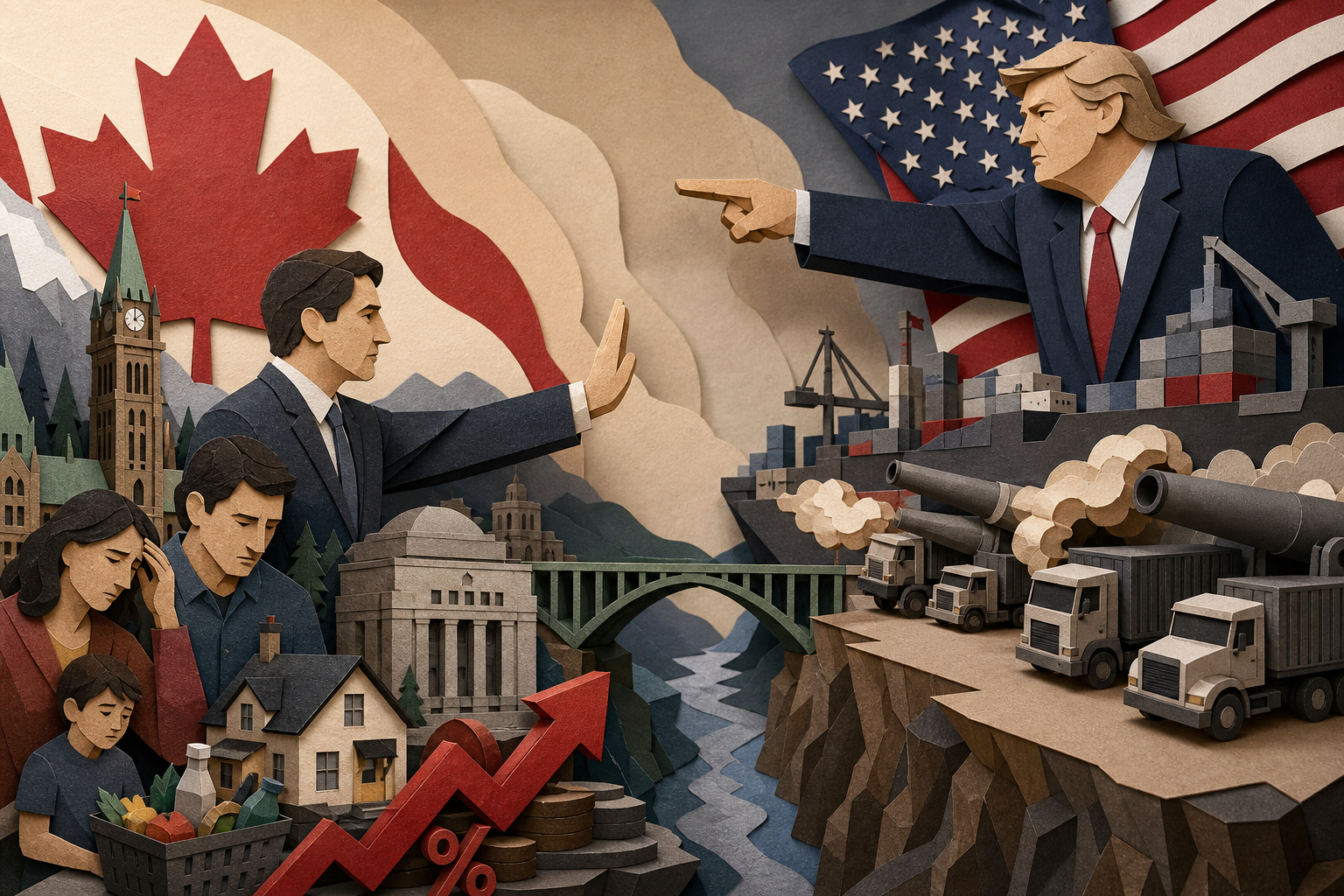

Jamieson Greer picked the week before tariffs go live to make his demand: Canada drops its countermeasures or Washington escalates next week. The timing is deliberate. This isn't a negotiation request, it's a pre-emptive strike disguised as diplomacy.
The underlying logic is brutal in its simplicity. Canada imposed retaliatory levies on U.S. goods, aluminum, steel, bourbon, playing cards, whatever combination of symbolic and economically targeted products Ottawa could assemble, because Washington imposed tariffs first. Those Canadian measures were always reactive, always defensive, always calibrated to inflict just enough electoral pain in swing states to force a rethink. The strategy worked twice under Trump 1.0. It demonstrably does not work now.
The Asymmetry Problem
The issue isn't whether Canada's retaliation is justified. It is. The issue is that justification doesn't generate leverage when your counterparty controls access to the market that accounts for 75% of your export volume. Over $3.5 billion CAD in goods and services cross the border daily. Greer's ultimatum works because if those flows slow, even marginally, the Canadian economy absorbs the cost first and absorbs it harder. The U.S. economy registers a rounding error. Canada's GDP contracts. That's the math, and it doesn't care about fairness.
What Greer is demanding, explicitly, is unilateral disarmament. Canada removes its countermeasures. The U.S. keeps its existing tariffs in place and simply chooses not to add new ones, this week. There is no reciprocal concession. No binding commitment not to escalate later. No promise that lifting retaliation now prevents a new round in September. The ask is: surrender your only negotiating tool in exchange for us not hitting you harder right this second.
That's not trade policy. That's protection money.
The CUSMA Clock
This demand isn't random. The Canada-United States-Mexico Agreement comes up for formal joint review in 2026. The review window allows any party to signal an intent to renegotiate or terminate. Greer's ultimatum is pre-positioning. If Canada enters those talks with no retaliatory measures left to deploy, Ottawa has already conceded the high ground before the first session. Every subsequent demand, digital services taxes, dairy quotas, softwood lumber, Buy American carve-outs, gets negotiated from a position where Canada has proven it will fold under pressure.
The White House clearly believes Canada's domestic vulnerabilities will force compliance. Inflation is elevated. Mortgage renewals are brutal. Housing costs dominate voter sentiment. If new tariffs push construction material costs higher or consumer goods prices rise measurably, the Bank of Canada's rate path gets more complicated, renewals get worse, and the Trudeau government absorbs the political damage in an election year. Greer is betting Ottawa can't afford the economic disruption and will choose the path that kicks the problem six months down the road.
What Backing Down Actually Costs
The argument for scrapping retaliation is straightforward: avoid the immediate pain, preserve trade flows, keep the relationship stable enough to survive the CUSMA review. The argument against is structural. If Canada establishes that ultimatums work, the ultimatums never stop. Every future trade dispute becomes a repeat of this one, Washington escalates, Ottawa folds, repeat. Retaliation was never supposed to win the fight. It was supposed to make the fight expensive enough that the other side reconsidered starting it. Giving that up to avoid one round of tariffs means the next round comes cheaper.
Sovereignty sounds abstract until you're explaining to exporters why their tariff relief depends on whether a foreign trade official decides your compliance was satisfactory. Greer's demand makes that dependence explicit. Canada can scrap its measures next week. The tariffs might still come anyway.
Read Next
Housing Targets Mean Little Without the Trades Workers to Build Them
200 Basis Points or 2%: What OSFI's Qualifying Rate Update Means for You
Canada's U.S. Export Dependency Dropped 3.7 Points Since Your Last Tariff Risk Check
Capital Power's Tariff Shield Holds, But Rate Assumptions Have Shifted: A Portfolio Reality Check for 2026