Fifteen-plus years of BC mortgage experience, distilled into practical writing on buying, renewing, refinancing, and building wealth through real estate.
When Finished Buildings Enter Receivership: What Toronto's Manderley Case Reveals About Developer Solvency
The Manderley sits two blocks from The Toronto Hunt Club, its 11 storeys finished, windows in, elevators working. Construction is done. Buyers are not moving in. The building at 1478-1496 Kingston Road entered court-ordered receivership in early 2026 despite being what the filings describe as "substantially complete", a term meaning roughly 95% of the physical work is behind schedule, awaiting only final inspections and occupancy permits. Developer Nova Ridge Development Partners failed to meet debt obligations to senior secured lenders, and the court handed control to a receiver tasked with selling off units to satisfy creditors.
This is not a hole in the ground with rust on the rebar. That kind of failure, mid-construction collapses where cranes go silent and liens pile up, dominated the receivership headlines of the 2010s. The Manderley represents something structurally different: a project that dies at the finish line because the capital stack collapses after the concrete has cured.
Why Finished Buildings Now Fail
The gap between physical completion and financial completion has widened into a chasm. A developer finishing construction in 2024 or 2025 often carried that work on bridge financing or construction loans priced at 7-9%, sometimes higher. The plan was always to refinance into cheaper takeout debt once the building was done and pre-sale deposits converted into closed mortgages. That plan assumes two things: that the appraised value of the finished asset meets or exceeds the construction debt, and that lenders are willing to provide that takeout financing at rates the economics can support.
In Toronto's current environment, neither assumption holds reliably. Appraisal values for new-build condos have been falling since mid-2023, trailing behind the cost base developers locked in during the pandemic construction boom. A building that cost $68 million to complete might appraise at $61 million today, especially in emerging corridors like Kingston Road in Scarborough, where comparable sales have softened. Add to that the reality that many buyers who put down deposits in 2021 or 2022 can no longer qualify for mortgages at current rates, and the gap between the debt owed and the capital available to close it becomes unmanageable. The developer is solvent on paper, the building exists, the units have buyers, but illiquid in fact, unable to convert completed inventory into cash fast enough to service the debt.
Nova Ridge is far from alone. Insolvency filings for multi-unit residential projects in Toronto hit a record pace in the first quarter of 2026, with a disproportionate share involving buildings already finished or near-finished. The failure is not operational. It is a failure of the financing structure to survive the crossing from construction to stabilization.
What Happens to Buyers
Buyers in a receivership face a peculiar form of limbo. The building is real. They can see it. They have signed agreements of purchase and sale, often years old. But they cannot take title until the receiver clears the legal and financial encumbrances, a process that can stretch six months or longer. In Ontario, deposits are generally protected by Tarion up to statutory limits, meaning buyers typically recover their money if the transaction collapses entirely. What they lose is time. A couple who committed $80,000 in 2021 and waited through construction will get that $80,000 back in 2027, having missed years of market movement and locked capital into a deal that never closed.
The receiver's job is to maximize value for creditors, not to preserve the original transaction structure. In practice, this often means bulk sales to institutional buyers, purpose-built rental operators or private equity funds willing to acquire 40 or 60 units at once at a discount. The Manderley, zoned and sold as condominiums, could easily convert into rental inventory without a single nail being moved.
Receivership used to signal construction risk. Now it signals something harder to see from the street: the risk that a developer's balance sheet cannot survive the gap between finishing the building and closing the last unit. Physical completion no longer guarantees financial survival. The building stands. The math does not.


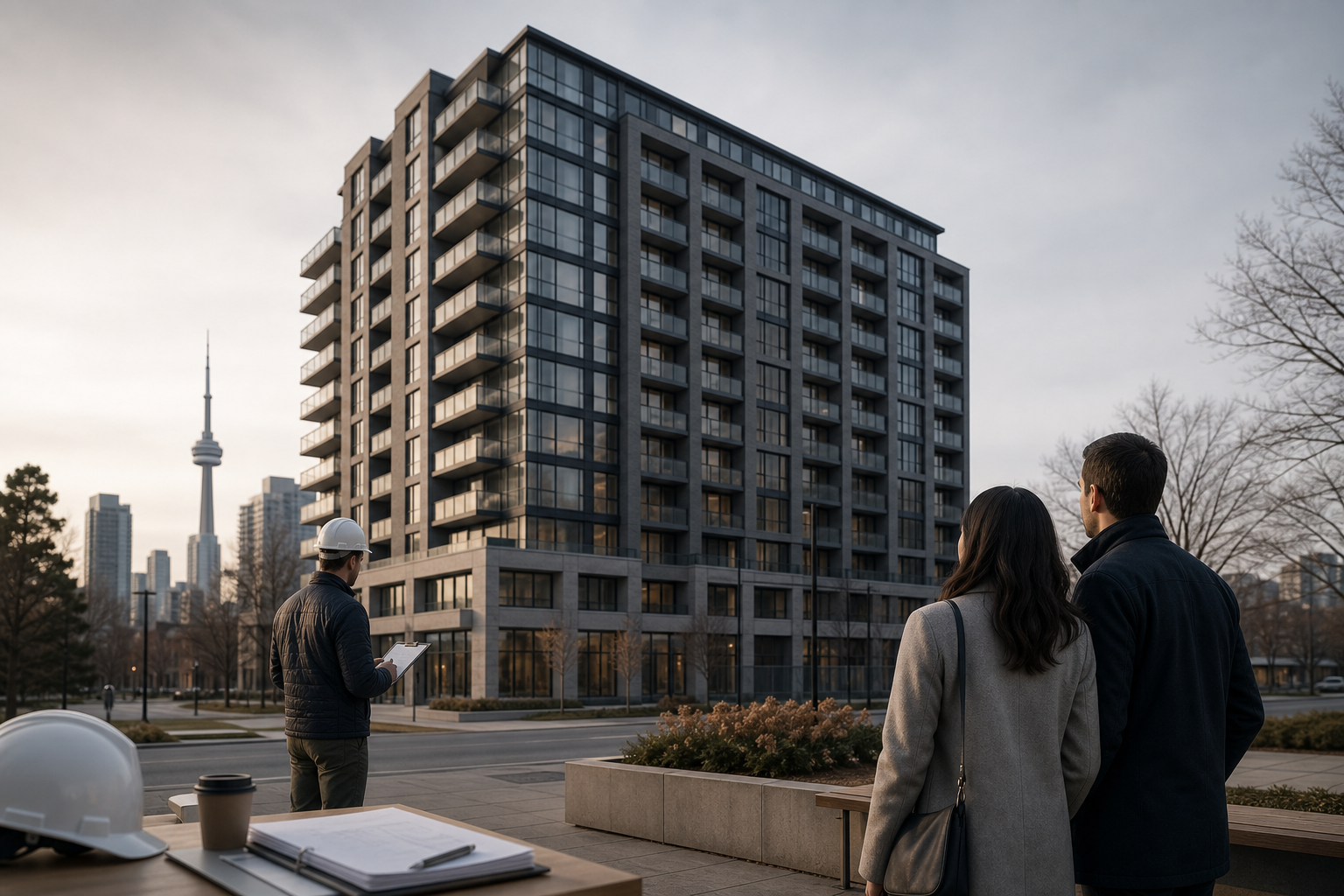

The Manderley sits two blocks from The Toronto Hunt Club, its 11 storeys finished, windows in, elevators working. Construction is done. Buyers are not moving in. The building at 1478-1496 Kingston Road entered court-ordered receivership in early 2026 despite being what the filings describe as "substantially complete", a term meaning roughly 95% of the physical work is behind schedule, awaiting only final inspections and occupancy permits. Developer Nova Ridge Development Partners failed to meet debt obligations to senior secured lenders, and the court handed control to a receiver tasked with selling off units to satisfy creditors.
This is not a hole in the ground with rust on the rebar. That kind of failure, mid-construction collapses where cranes go silent and liens pile up, dominated the receivership headlines of the 2010s. The Manderley represents something structurally different: a project that dies at the finish line because the capital stack collapses after the concrete has cured.
Why Finished Buildings Now Fail
The gap between physical completion and financial completion has widened into a chasm. A developer finishing construction in 2024 or 2025 often carried that work on bridge financing or construction loans priced at 7-9%, sometimes higher. The plan was always to refinance into cheaper takeout debt once the building was done and pre-sale deposits converted into closed mortgages. That plan assumes two things: that the appraised value of the finished asset meets or exceeds the construction debt, and that lenders are willing to provide that takeout financing at rates the economics can support.
In Toronto's current environment, neither assumption holds reliably. Appraisal values for new-build condos have been falling since mid-2023, trailing behind the cost base developers locked in during the pandemic construction boom. A building that cost $68 million to complete might appraise at $61 million today, especially in emerging corridors like Kingston Road in Scarborough, where comparable sales have softened. Add to that the reality that many buyers who put down deposits in 2021 or 2022 can no longer qualify for mortgages at current rates, and the gap between the debt owed and the capital available to close it becomes unmanageable. The developer is solvent on paper, the building exists, the units have buyers, but illiquid in fact, unable to convert completed inventory into cash fast enough to service the debt.
Nova Ridge is far from alone. Insolvency filings for multi-unit residential projects in Toronto hit a record pace in the first quarter of 2026, with a disproportionate share involving buildings already finished or near-finished. The failure is not operational. It is a failure of the financing structure to survive the crossing from construction to stabilization.
What Happens to Buyers
Buyers in a receivership face a peculiar form of limbo. The building is real. They can see it. They have signed agreements of purchase and sale, often years old. But they cannot take title until the receiver clears the legal and financial encumbrances, a process that can stretch six months or longer. In Ontario, deposits are generally protected by Tarion up to statutory limits, meaning buyers typically recover their money if the transaction collapses entirely. What they lose is time. A couple who committed $80,000 in 2021 and waited through construction will get that $80,000 back in 2027, having missed years of market movement and locked capital into a deal that never closed.
The receiver's job is to maximize value for creditors, not to preserve the original transaction structure. In practice, this often means bulk sales to institutional buyers, purpose-built rental operators or private equity funds willing to acquire 40 or 60 units at once at a discount. The Manderley, zoned and sold as condominiums, could easily convert into rental inventory without a single nail being moved.
Receivership used to signal construction risk. Now it signals something harder to see from the street: the risk that a developer's balance sheet cannot survive the gap between finishing the building and closing the last unit. Physical completion no longer guarantees financial survival. The building stands. The math does not.
Read Next
Apple's Price-to-Earnings Ratio Isn't Insane, It's Ecosystem Math
Canada Lost 55,000 People This Quarter, So Why Aren't Home Prices Following?
CRA's New Billion-Dollar Ruling Program: How to Lock in Tax Certainty Before You Build
Why Porting Your 2.7% Mortgage Could Cost You $47,000 More Than Breaking It