Fifteen-plus years of BC mortgage experience, distilled into practical writing on buying, renewing, refinancing, and building wealth through real estate.
Apple's Price-to-Earnings Ratio Isn't Insane, It's Ecosystem Math
Warren Buffett's Berkshire Hathaway owns $84.2 billion worth of Apple shares as of Q2 2026, and Buffett has called the iPhone maker one of his "anchor" investments. He doesn't own it because he thinks Apple makes nice phones. He owns it because Apple has built what he calls a "moat", the Services division, which throws off cash with profit margins hardware can only dream about. Services revenue collects money whether the customer upgrades their hardware or not.
The landlord hiding inside the device company
Apple's Services revenue, App Store commissions, iCloud subscriptions, Apple Pay fees, AppleCare, hit all-time highs in fiscal 2024 and 2025, accounting for roughly 25% of total company revenue. The margin on that revenue runs significantly higher than the margin on a $1,400 iPhone. An iPhone sale is a one-time event. An iCloud subscription at $3.99 per month is a recurring charge that compounds over years. The App Store takes up to 30% of every digital transaction that happens inside the iOS environment. Apple doesn't make the app. It doesn't host the content in most cases. It collects the fee because it owns the only storefront allowed on the device.
This is why comparing Apple's price-to-earnings ratio to Samsung's or any traditional hardware manufacturer misses the structure of what investors are actually buying. Samsung sells you a phone. Apple sells you a phone and then charges rent on the App Store, iCloud, Apple Pay, and other software services you're now using inside the device. The valuation multiple reflects that difference. Investors aren't paying a premium for better hardware. They're paying for recurring, high-margin revenue streams that don't require shipping a physical product.
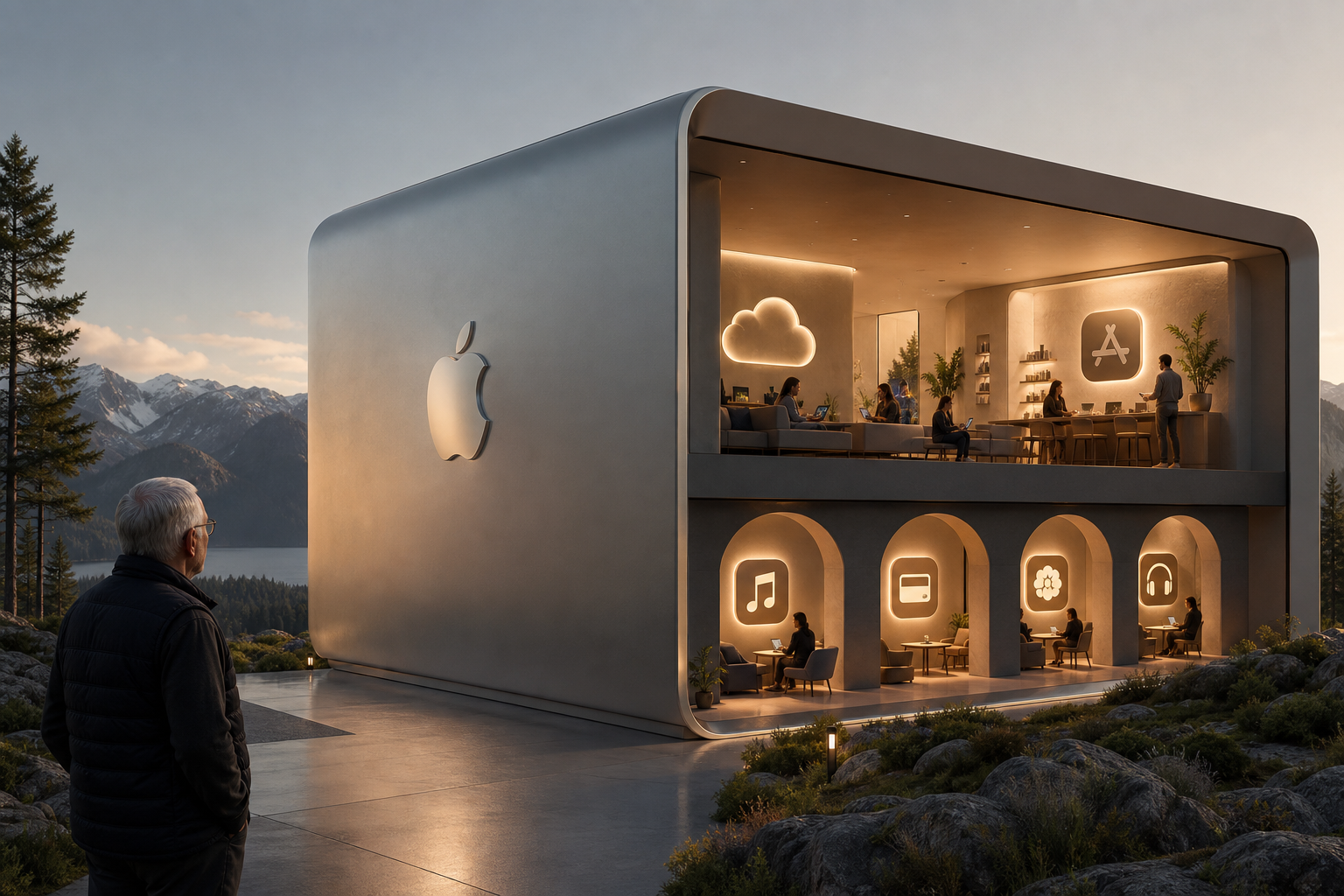
Think of it this way: the iPhone is the residential building. The App Store is the property management company that never stops collecting. A Vancouver landlord who owns a building in Kitsilano doesn't make money when the building appreciates. They make money from the monthly rent checks. Apple's business model is the same, except the building fits in your pocket and the tenant has no realistic option to move.
The switching cost Apple engineered on purpose
Leaving Apple is expensive in ways that don't show up on a price tag. Your photos live in iCloud. Your messages are in iMessage. Your apps were purchased through the App Store, and they don't transfer to Android. The longer you've owned Apple devices, the higher the cost of exit. That's not a bug. That's the business model.
Apple Intelligence, the company's newest AI offering, requires iPhone 15 Pro or later, or M1 Macs or newer, to run local processing. If you want the new features, you need new silicon. That dependency forces an upgrade cycle that investors previously thought was slowing down. The Services revenue depends on active devices, and Apple just rebuilt the forcing function.
The regulatory crack nobody's pricing in
The Canadian government and international regulators are increasingly focused on "walled garden" platforms. If Apple is forced to allow third-party app stores on iOS, something the European Union has already mandated under the Digital Markets Act, the 30% App Store commission evaporates on a significant portion of global transactions. That commission is the highest-margin product Apple sells. The risk is that regulators will force Apple to open the App Store, a threshold the stock price isn't fully accounting for.
BC business owners running Square or Shopify point-of-sale systems on iPads are working inside that same closed loop. The hardware is reliable. The software works. Apple collects a percentage whether the business grows or not because it controls the software layer.
The P/E ratio looks high if you think Apple is a phone company. It looks reasonable if you recognize Apple as a digital landlord with 1.5 billion tenants who have already moved in.



Warren Buffett's Berkshire Hathaway owns $84.2 billion worth of Apple shares as of Q2 2026, and Buffett has called the iPhone maker one of his "anchor" investments. He doesn't own it because he thinks Apple makes nice phones. He owns it because Apple has built what he calls a "moat", the Services division, which throws off cash with profit margins hardware can only dream about. Services revenue collects money whether the customer upgrades their hardware or not.
The landlord hiding inside the device company
Apple's Services revenue, App Store commissions, iCloud subscriptions, Apple Pay fees, AppleCare, hit all-time highs in fiscal 2024 and 2025, accounting for roughly 25% of total company revenue. The margin on that revenue runs significantly higher than the margin on a $1,400 iPhone. An iPhone sale is a one-time event. An iCloud subscription at $3.99 per month is a recurring charge that compounds over years. The App Store takes up to 30% of every digital transaction that happens inside the iOS environment. Apple doesn't make the app. It doesn't host the content in most cases. It collects the fee because it owns the only storefront allowed on the device.
This is why comparing Apple's price-to-earnings ratio to Samsung's or any traditional hardware manufacturer misses the structure of what investors are actually buying. Samsung sells you a phone. Apple sells you a phone and then charges rent on the App Store, iCloud, Apple Pay, and other software services you're now using inside the device. The valuation multiple reflects that difference. Investors aren't paying a premium for better hardware. They're paying for recurring, high-margin revenue streams that don't require shipping a physical product.
Think of it this way: the iPhone is the residential building. The App Store is the property management company that never stops collecting. A Vancouver landlord who owns a building in Kitsilano doesn't make money when the building appreciates. They make money from the monthly rent checks. Apple's business model is the same, except the building fits in your pocket and the tenant has no realistic option to move.
The switching cost Apple engineered on purpose
Leaving Apple is expensive in ways that don't show up on a price tag. Your photos live in iCloud. Your messages are in iMessage. Your apps were purchased through the App Store, and they don't transfer to Android. The longer you've owned Apple devices, the higher the cost of exit. That's not a bug. That's the business model.
Apple Intelligence, the company's newest AI offering, requires iPhone 15 Pro or later, or M1 Macs or newer, to run local processing. If you want the new features, you need new silicon. That dependency forces an upgrade cycle that investors previously thought was slowing down. The Services revenue depends on active devices, and Apple just rebuilt the forcing function.
The regulatory crack nobody's pricing in
The Canadian government and international regulators are increasingly focused on "walled garden" platforms. If Apple is forced to allow third-party app stores on iOS, something the European Union has already mandated under the Digital Markets Act, the 30% App Store commission evaporates on a significant portion of global transactions. That commission is the highest-margin product Apple sells. The risk is that regulators will force Apple to open the App Store, a threshold the stock price isn't fully accounting for.
BC business owners running Square or Shopify point-of-sale systems on iPads are working inside that same closed loop. The hardware is reliable. The software works. Apple collects a percentage whether the business grows or not because it controls the software layer.
The P/E ratio looks high if you think Apple is a phone company. It looks reasonable if you recognize Apple as a digital landlord with 1.5 billion tenants who have already moved in.
Sources
Read Next
Canada Lost 55,000 People This Quarter, So Why Aren't Home Prices Following?
CRA's New Billion-Dollar Ruling Program: How to Lock in Tax Certainty Before You Build
Why Porting Your 2.7% Mortgage Could Cost You $47,000 More Than Breaking It
Why Your Mortgage Renewal Is Making Crypto Look Smart (And What That Tells You)