Fifteen-plus years of BC mortgage experience, distilled into practical writing on buying, renewing, refinancing, and building wealth through real estate.
Why Canadian Homeowners Can't Walk Away From a Mortgage Like Americans Did in 2008
During the 2008 financial crisis, Americans in states like Arizona and Nevada mailed their house keys to the bank and moved on. The practice, known as "jingle mail," became so common that foreclosure timelines in some counties stretched to 18 months. In Canada, that same move would have been financial suicide.
The difference comes down to a single legal word: recourse.
The Personal Liability Trap
Most Canadian provinces operate under recourse mortgage laws. When a borrower defaults and the property sells for less than the outstanding debt, the lender can sue for the shortfall. That deficiency becomes an unsecured debt, enforceable through wage garnishment and asset seizure. In Ontario, lenders have two years from the date of sale to file a deficiency claim. In British Columbia, that window is six years.
The mortgage doesn't die when you hand over the keys. It transforms into something worse: a debt untethered from any collateral, sitting on your credit file for six to seven years and following you through job changes, rental applications, and any future attempt to borrow.
Why Alberta Looks Different (But Isn't)
Alberta offers non-recourse mortgages, but only under conditions that exclude most homeowners. The protection applies to conventional loans with at least 20 percent down, held by individuals, on residential property. If your mortgage is insured through CMHC, Sagen, or Canada Guaranty because you put down less than 20 percent, the non-recourse protection disappears. The insurer pays the lender, then pursues you directly for the loss through a process called subrogation.
Saskatchewan has similar carveouts, though they depend on the lender type and when the mortgage was signed. For the 70 percent of Canadian first-time buyers who put down less than 20 percent, these regional protections are irrelevant.
The Insurer's Second Bite
Mortgage default insurance exists to protect lenders, not borrowers. When an insured mortgage goes into default, the lender files a claim with CMHC or a private insurer. The insurer pays the claim, often within weeks. Then the insurer steps into the lender's shoes and chases the borrower for the full amount, plus interest and legal costs.
This creates a perverse outcome: the borrower loses the house and inherits a debt to a federal crown corporation with collection powers that exceed those of a private bank. CMHC does not negotiate. It does not offer payment plans that forgive principal. It refers files to the Canada Revenue Agency for offset against tax refunds.
The Foreclosure vs. Power of Sale Divide
In Ontario, over 90 percent of defaults are resolved through power of sale, a faster process that lets the lender sell the property without taking title. If the sale generates a surplus above the debt and legal costs, the borrower is entitled to that money. In practice, distressed sales rarely produce surpluses.
In British Columbia and Quebec, foreclosure is more common. The lender takes title to the property, and any profit from a future sale belongs to the lender. The borrower walks away with nothing, even if the market recovers.
What Walking Away Actually Costs
A 47-year-old borrower in Mississauga who stops paying on a $650,000 mortgage and lets the property go to power of sale will face: a deficiency judgment if the sale nets less than the debt, a credit file destroyed for six to seven years, potential wage garnishment, and a taxable event if the property was an investment rather than a principal residence.
The alternative many borrowers take is a consumer proposal or bankruptcy, both of which at least put a fence around the damage. A consumer proposal negotiated through a licensed insolvency trustee can settle the deficiency at a discount and restore credit access within two to three years.
The system is designed this way. Canadian banking stability during 2008 is often credited to stricter lending rules, but recourse laws did as much work. When the debt follows the person, fewer people default. The cost of that stability is borne entirely by underwater borrowers who cannot escape.


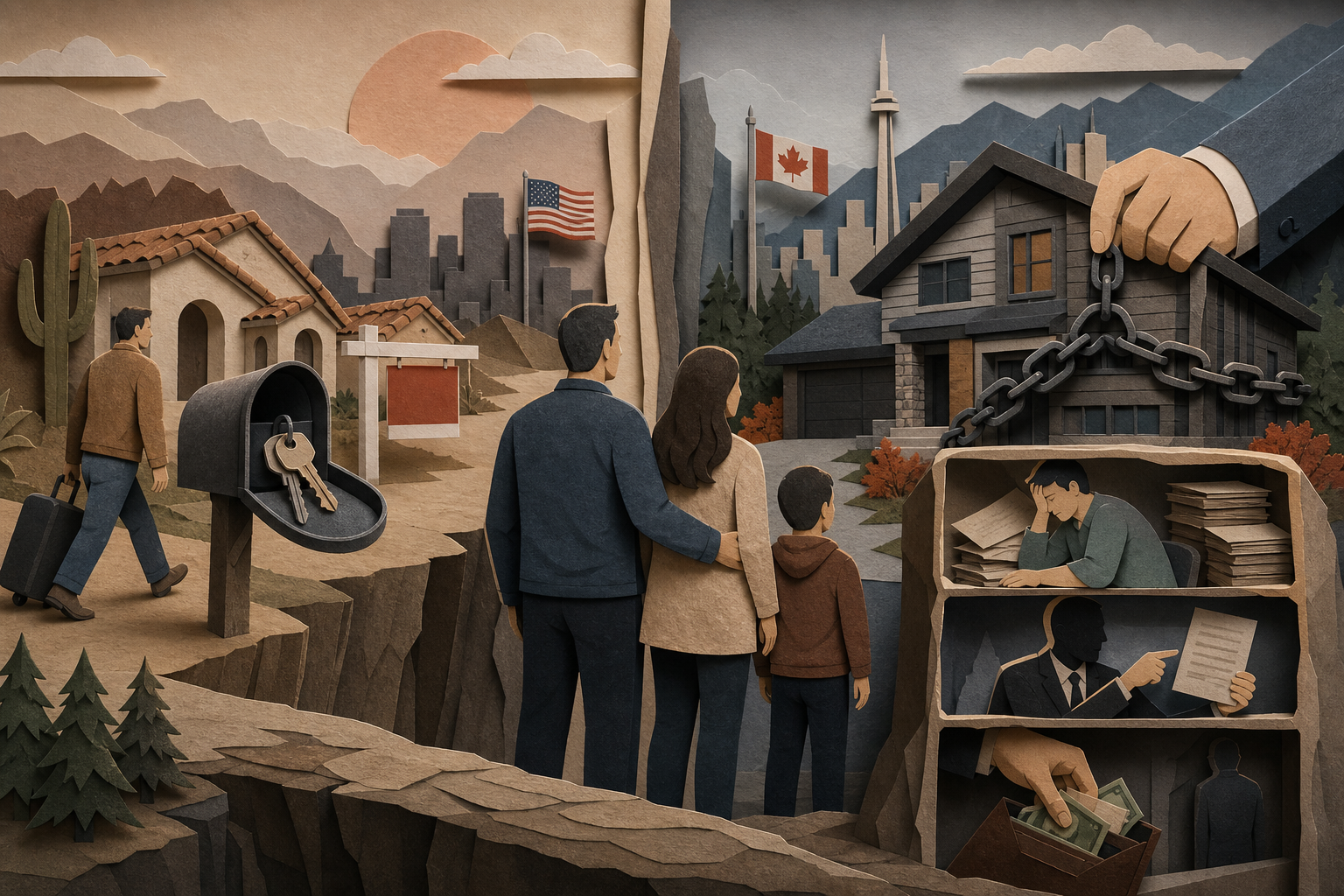

During the 2008 financial crisis, Americans in states like Arizona and Nevada mailed their house keys to the bank and moved on. The practice, known as "jingle mail," became so common that foreclosure timelines in some counties stretched to 18 months. In Canada, that same move would have been financial suicide.
The difference comes down to a single legal word: recourse.
The Personal Liability Trap
Most Canadian provinces operate under recourse mortgage laws. When a borrower defaults and the property sells for less than the outstanding debt, the lender can sue for the shortfall. That deficiency becomes an unsecured debt, enforceable through wage garnishment and asset seizure. In Ontario, lenders have two years from the date of sale to file a deficiency claim. In British Columbia, that window is six years.
The mortgage doesn't die when you hand over the keys. It transforms into something worse: a debt untethered from any collateral, sitting on your credit file for six to seven years and following you through job changes, rental applications, and any future attempt to borrow.
Why Alberta Looks Different (But Isn't)
Alberta offers non-recourse mortgages, but only under conditions that exclude most homeowners. The protection applies to conventional loans with at least 20 percent down, held by individuals, on residential property. If your mortgage is insured through CMHC, Sagen, or Canada Guaranty because you put down less than 20 percent, the non-recourse protection disappears. The insurer pays the lender, then pursues you directly for the loss through a process called subrogation.
Saskatchewan has similar carveouts, though they depend on the lender type and when the mortgage was signed. For the 70 percent of Canadian first-time buyers who put down less than 20 percent, these regional protections are irrelevant.
The Insurer's Second Bite
Mortgage default insurance exists to protect lenders, not borrowers. When an insured mortgage goes into default, the lender files a claim with CMHC or a private insurer. The insurer pays the claim, often within weeks. Then the insurer steps into the lender's shoes and chases the borrower for the full amount, plus interest and legal costs.
This creates a perverse outcome: the borrower loses the house and inherits a debt to a federal crown corporation with collection powers that exceed those of a private bank. CMHC does not negotiate. It does not offer payment plans that forgive principal. It refers files to the Canada Revenue Agency for offset against tax refunds.
The Foreclosure vs. Power of Sale Divide
In Ontario, over 90 percent of defaults are resolved through power of sale, a faster process that lets the lender sell the property without taking title. If the sale generates a surplus above the debt and legal costs, the borrower is entitled to that money. In practice, distressed sales rarely produce surpluses.
In British Columbia and Quebec, foreclosure is more common. The lender takes title to the property, and any profit from a future sale belongs to the lender. The borrower walks away with nothing, even if the market recovers.
What Walking Away Actually Costs
A 47-year-old borrower in Mississauga who stops paying on a $650,000 mortgage and lets the property go to power of sale will face: a deficiency judgment if the sale nets less than the debt, a credit file destroyed for six to seven years, potential wage garnishment, and a taxable event if the property was an investment rather than a principal residence.
The alternative many borrowers take is a consumer proposal or bankruptcy, both of which at least put a fence around the damage. A consumer proposal negotiated through a licensed insolvency trustee can settle the deficiency at a discount and restore credit access within two to three years.
The system is designed this way. Canadian banking stability during 2008 is often credited to stricter lending rules, but recourse laws did as much work. When the debt follows the person, fewer people default. The cost of that stability is borne entirely by underwater borrowers who cannot escape.
Read Next
Canada Lost 55,000 People This Quarter, So Why Aren't Home Prices Following?
CRA's New Billion-Dollar Ruling Program: How to Lock in Tax Certainty Before You Build
Why Porting Your 2.7% Mortgage Could Cost You $47,000 More Than Breaking It
Why Your Mortgage Renewal Is Making Crypto Look Smart (And What That Tells You)