Fifteen-plus years of BC mortgage experience, distilled into practical writing on buying, renewing, refinancing, and building wealth through real estate.
Reinforce or Restore: Weighing Storm Prep Costs Against Post-Storm Yard Repairs
It usually starts with a long night of rain. By morning the beds along the side of the house are standing in water, the lawn squelches underfoot, and the wind has dropped a few branches from the big maple across the driveway. The yard that gave you somewhere to sit all summer is now a list of jobs, and some of those jobs may come with bills you hadn't planned for.
If you've ever watched water collect beside your house during heavy rain and wondered whether your savings could cover the damage, you know how quickly a yard concern becomes a household-budget concern. So the useful question is which precautions actually lower the odds of a large repair bill, and which are expensive projects that leave the real risk in place. The answer comes down to one principle: the best storm-preparation spending addresses what could damage the house. The garden comes a distant second.
That matters here in British Columbia. We don't get an Atlantic hurricane season, but coastal windstorms and long bouts of heavy rain arrive every fall and winter, and the November 2021 flooding in southern BC was a reminder that rainfall is a local concern. The friction is real on both sides. Nobody wants to pay to fix a yard that looks fine. Waiting, though, can mean urgent cleanup, several repair bills landing at once, and less money left for the mortgage payment and groceries.
What prevention costs before a storm, and what it can stop afterward
Put the same risk on both sides of the ledger and the comparison gets clearer.
Risk
Planned work before a storm
What can follow if it fails
Trees near the house
Assessment by a qualified arborist, then any work they recommend
Emergency removal and disposal, plus repairs to whatever the tree hits: roof, gutters, fence, car
Water pooling near the foundation
Clearing reachable gutters, checking that downspout outlets carry water away, professional drainage assessment if pooling keeps returning
Wet basement, ruined flooring and drywall, drying and mould cleanup, possible foundation repair if soil washes out
Soil and garden beds
Mulching bare soil, keeping beds from channelling water toward the house
Replanting, replacing soil, regrading
Prevention costs money too, and an arborist's assessment alone removes nothing. It tells you whether there's a hazard worth paying to fix. Ask for qualified advice rather than aggressive pruning or topping, which can leave a tree weaker.
Look at what sits in the right-hand column. The tree and water rows lead to the building, where one problem triggers the next: a cracked roof lets in rain, rain soaks insulation, wet insulation becomes a contractor's bill. The garden row stays outside. Lost plants are annoying and cost something to replace, and that's usually where it ends. That difference tells you where your first dollars belong.
Which yard work is worth paying for first?
Rank the work in three tiers. First, anything that protects the building and your access to it: trees within reach of the roof or driveway, water collecting against the foundation. Second, hazards you've actually seen, like a leaning trunk or a low spot that floods every storm. Appearance comes last.
When you get a quote, ask for it itemized: the hazard, the proposed work, and what the work won't fix. Compare that against the full repair scope it could prevent, never just the price of new shrubs. If the work involves removing a tree or changing drainage, check your municipality's requirements, and never send runoff toward a neighbour's property.
Then call your insurer before assuming anything is covered. Many policies treat trees, landscaping and certain water damage very differently from the house itself. Your deductible decides how much of a repair bill comes out of your savings. Lenders also require valid property insurance, so damage to the home can follow you into a renewal or refinance.
None of this makes a property storm-proof. A severe enough storm can overwhelm sensible preparation. What you can do is cut down the number of ways a manageable outdoor problem turns into a household financial emergency. Start this week: find the yard problem closest to your house, and ask what it would take to reduce that one specific risk.


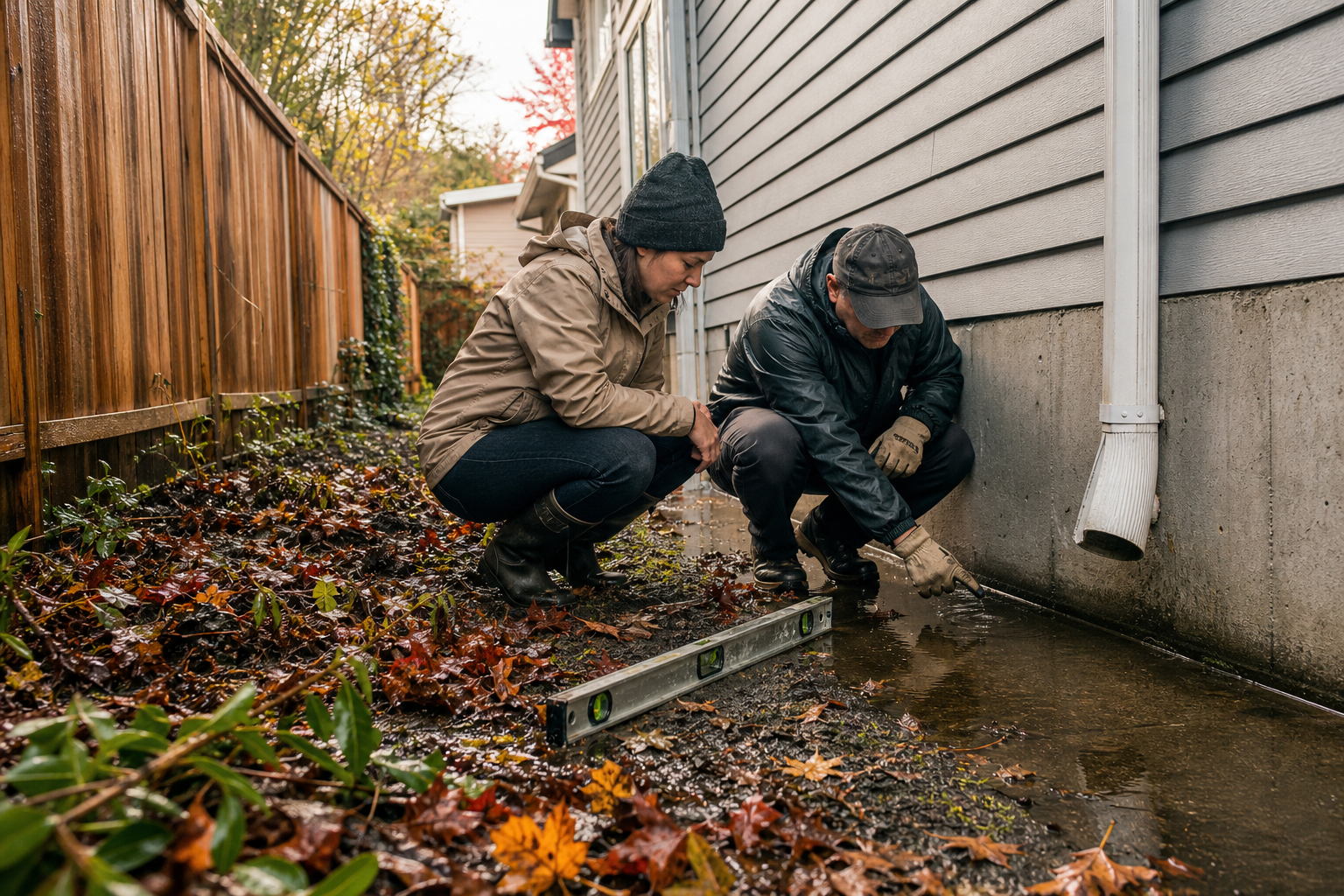

It usually starts with a long night of rain. By morning the beds along the side of the house are standing in water, the lawn squelches underfoot, and the wind has dropped a few branches from the big maple across the driveway. The yard that gave you somewhere to sit all summer is now a list of jobs, and some of those jobs may come with bills you hadn't planned for.
If you've ever watched water collect beside your house during heavy rain and wondered whether your savings could cover the damage, you know how quickly a yard concern becomes a household-budget concern. So the useful question is which precautions actually lower the odds of a large repair bill, and which are expensive projects that leave the real risk in place. The answer comes down to one principle: the best storm-preparation spending addresses what could damage the house. The garden comes a distant second.
That matters here in British Columbia. We don't get an Atlantic hurricane season, but coastal windstorms and long bouts of heavy rain arrive every fall and winter, and the November 2021 flooding in southern BC was a reminder that rainfall is a local concern. The friction is real on both sides. Nobody wants to pay to fix a yard that looks fine. Waiting, though, can mean urgent cleanup, several repair bills landing at once, and less money left for the mortgage payment and groceries.
What prevention costs before a storm, and what it can stop afterward
Put the same risk on both sides of the ledger and the comparison gets clearer.
Prevention costs money too, and an arborist's assessment alone removes nothing. It tells you whether there's a hazard worth paying to fix. Ask for qualified advice rather than aggressive pruning or topping, which can leave a tree weaker.
Look at what sits in the right-hand column. The tree and water rows lead to the building, where one problem triggers the next: a cracked roof lets in rain, rain soaks insulation, wet insulation becomes a contractor's bill. The garden row stays outside. Lost plants are annoying and cost something to replace, and that's usually where it ends. That difference tells you where your first dollars belong.
Which yard work is worth paying for first?
Rank the work in three tiers. First, anything that protects the building and your access to it: trees within reach of the roof or driveway, water collecting against the foundation. Second, hazards you've actually seen, like a leaning trunk or a low spot that floods every storm. Appearance comes last.
When you get a quote, ask for it itemized: the hazard, the proposed work, and what the work won't fix. Compare that against the full repair scope it could prevent, never just the price of new shrubs. If the work involves removing a tree or changing drainage, check your municipality's requirements, and never send runoff toward a neighbour's property.
Then call your insurer before assuming anything is covered. Many policies treat trees, landscaping and certain water damage very differently from the house itself. Your deductible decides how much of a repair bill comes out of your savings. Lenders also require valid property insurance, so damage to the home can follow you into a renewal or refinance.
None of this makes a property storm-proof. A severe enough storm can overwhelm sensible preparation. What you can do is cut down the number of ways a manageable outdoor problem turns into a household financial emergency. Start this week: find the yard problem closest to your house, and ask what it would take to reduce that one specific risk.
Read Next
What Happens When You Tap Home Equity Before Both of You Turn 55
Buying an Owner-Occupied Duplex: The 4 Steps Before Subject Removal
Why Waiting for Mortgage Rates to Drop Will Probably Cost You More
Refinance Early to Escape Market Uncertainty or Ride Out Your Term? Here's Who Each One Is For