Fifteen-plus years of BC mortgage experience, distilled into practical writing on buying, renewing, refinancing, and building wealth through real estate.
American Alcohol Producers Just Discovered They're Collateral Damage in Trump's Canada Tariff War
Kentucky bourbon exporters watched their Canadian sales fall 15 percent in the first quarter after Ottawa slapped retaliatory tariffs on American whiskey in March. The damage wasn't theoretical. Four distilleries in Bardstown, a town of 13,000 people where bourbon accounts for nearly a third of local employment, cut overtime shifts and froze hiring.
The American alcohol industry just learned what steel workers and soybean farmers figured out years ago: you don't need to be the target of a trade war to get hurt by one.
The Retaliation Playbook Canada Already Used
Canada's tariff response followed a well-worn script. When Trump imposed 25 percent steel and aluminum tariffs in March, Ottawa responded within 72 hours with countermeasures specifically designed to hit Republican electoral districts. Bourbon, wine from California's Central Valley, and craft beer from swing-state breweries all landed on the list. Not because Canada imports meaningful volumes of American beer, it doesn't, but because the tariffs needed to cause political pain in places like Kentucky's 2nd Congressional District and Wisconsin's 6th.
That calculation worked in 2018, when Trump's first tariff round triggered identical Canadian retaliation. Bourbon exports to Canada dropped 23 percent that year. Jim Beam and Maker's Mark both reported double-digit revenue declines in their Canadian business. The tariffs stayed in place for 11 months before the USMCA negotiations forced a reset.
This time the damage is piling up faster. American wine shipments to Ontario, which controls liquor distribution across Canada's largest provincial market, are down 8 percent year-over-year through April. The LCBO, Ontario's provincial monopolor retailer, quietly started replacing shelf space for California labels with Australian and Chilean alternatives in late March. Those supplier relationships, once lost, don't automatically return when tariffs lift.
Small Producers Absorb What Big Ones Can Hedge
The bifurcated impact is the part that doesn't make headlines. Diageo and Constellation Brands have the balance sheets and the distributor networks to shift volume into other export markets or eat the tariff cost in Canada while they wait it out. A 40-barrel craft distillery in Oregon selling 200 cases a month into Vancouver does not. The tariff is the same 25 percent. The ability to survive it is not.
Tariffs on alcohol hit twice. First at the border, where the importer pays the duty. Then at retail, where the price increase shows up on the shelf and volume drops. A $42 bottle of American bourbon in Toronto is now $52.50 after tariff pass-through. Canadian consumers have demonstrated they will not pay a 25 percent premium for brand loyalty when a Scotch or Irish whiskey sits beside it at the old price.
What the industry fears most is not the immediate revenue hit but the replacement effect. Every month a Canadian liquor buyer stocks more European wine or Japanese whisky is a month American producers lose mindshare, shelf placement, and the distributor relationships that take years to rebuild. Bourbon's market share in Canada grew steadily from 2015 to 2024, reaching 11 percent of all spirits sold. That share is already reversing.
The White House framed the Canada tariffs as leverage to force concessions on trade imbalances and border security. The alcohol industry wasn't consulted. It also wasn't exempted. The Distilled Spirits Council sent a delegation to the USTR in April asking for carve-outs. The request went nowhere.
So Kentucky distillers are cutting shifts while the administration negotiates over steel quotas and dairy access. The tariffs are working exactly as designed, just not for the people paying them.


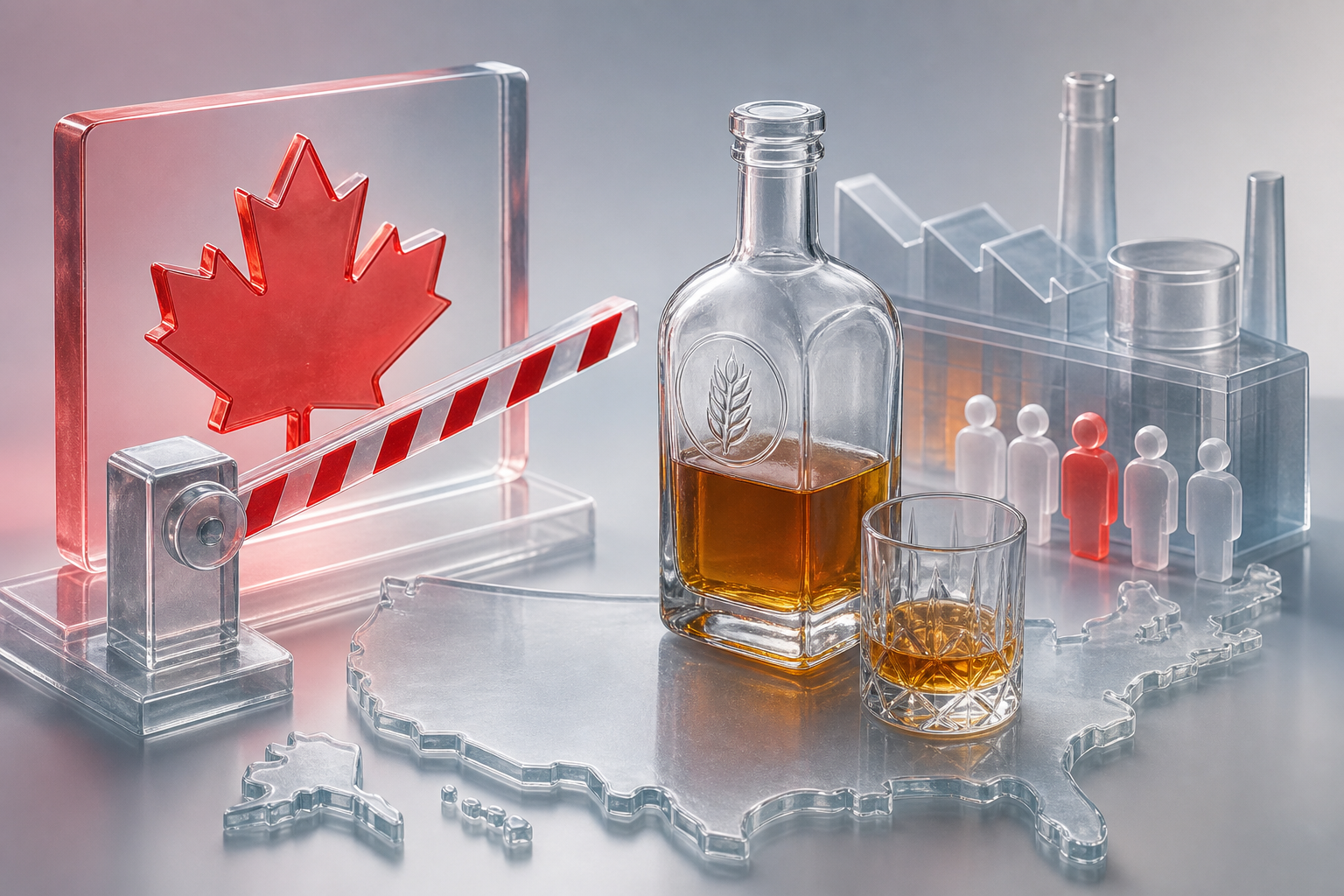

Kentucky bourbon exporters watched their Canadian sales fall 15 percent in the first quarter after Ottawa slapped retaliatory tariffs on American whiskey in March. The damage wasn't theoretical. Four distilleries in Bardstown, a town of 13,000 people where bourbon accounts for nearly a third of local employment, cut overtime shifts and froze hiring.
The American alcohol industry just learned what steel workers and soybean farmers figured out years ago: you don't need to be the target of a trade war to get hurt by one.
The Retaliation Playbook Canada Already Used
Canada's tariff response followed a well-worn script. When Trump imposed 25 percent steel and aluminum tariffs in March, Ottawa responded within 72 hours with countermeasures specifically designed to hit Republican electoral districts. Bourbon, wine from California's Central Valley, and craft beer from swing-state breweries all landed on the list. Not because Canada imports meaningful volumes of American beer, it doesn't, but because the tariffs needed to cause political pain in places like Kentucky's 2nd Congressional District and Wisconsin's 6th.
That calculation worked in 2018, when Trump's first tariff round triggered identical Canadian retaliation. Bourbon exports to Canada dropped 23 percent that year. Jim Beam and Maker's Mark both reported double-digit revenue declines in their Canadian business. The tariffs stayed in place for 11 months before the USMCA negotiations forced a reset.
This time the damage is piling up faster. American wine shipments to Ontario, which controls liquor distribution across Canada's largest provincial market, are down 8 percent year-over-year through April. The LCBO, Ontario's provincial monopolor retailer, quietly started replacing shelf space for California labels with Australian and Chilean alternatives in late March. Those supplier relationships, once lost, don't automatically return when tariffs lift.
Small Producers Absorb What Big Ones Can Hedge
The bifurcated impact is the part that doesn't make headlines. Diageo and Constellation Brands have the balance sheets and the distributor networks to shift volume into other export markets or eat the tariff cost in Canada while they wait it out. A 40-barrel craft distillery in Oregon selling 200 cases a month into Vancouver does not. The tariff is the same 25 percent. The ability to survive it is not.
Tariffs on alcohol hit twice. First at the border, where the importer pays the duty. Then at retail, where the price increase shows up on the shelf and volume drops. A $42 bottle of American bourbon in Toronto is now $52.50 after tariff pass-through. Canadian consumers have demonstrated they will not pay a 25 percent premium for brand loyalty when a Scotch or Irish whiskey sits beside it at the old price.
What the industry fears most is not the immediate revenue hit but the replacement effect. Every month a Canadian liquor buyer stocks more European wine or Japanese whisky is a month American producers lose mindshare, shelf placement, and the distributor relationships that take years to rebuild. Bourbon's market share in Canada grew steadily from 2015 to 2024, reaching 11 percent of all spirits sold. That share is already reversing.
The White House framed the Canada tariffs as leverage to force concessions on trade imbalances and border security. The alcohol industry wasn't consulted. It also wasn't exempted. The Distilled Spirits Council sent a delegation to the USTR in April asking for carve-outs. The request went nowhere.
So Kentucky distillers are cutting shifts while the administration negotiates over steel quotas and dairy access. The tariffs are working exactly as designed, just not for the people paying them.
Read Next
Canada Lost 55,000 People This Quarter, So Why Aren't Home Prices Following?
CRA's New Billion-Dollar Ruling Program: How to Lock in Tax Certainty Before You Build
Why Porting Your 2.7% Mortgage Could Cost You $47,000 More Than Breaking It
Why Your Mortgage Renewal Is Making Crypto Look Smart (And What That Tells You)