Fifteen-plus years of BC mortgage experience, distilled into practical writing on buying, renewing, refinancing, and building wealth through real estate.
7 Ways the August 19 US Tariff Hike Will Hit Your Wallet (and 4 Moves to Make Now)
A 50% tariff on Canadian goods clears U.S. customs starting August 19, and the sticker shock won't wait for the nightly news to explain it. Groceries first, then energy, then everything else with a cross-border supply chain longer than three steps. Here's what rises and what you do this week.
Seven things getting more expensive
1. Gasoline jumps 15-25 cents per litre within 72 hours
Canada supplies roughly 60% of U.S. crude oil imports. A tariff this size acts as an immediate consumption tax on energy. Expect pump prices to spike the week of August 19. Retailers price fuel on replacement cost, not inventory cost, so even gas already in the ground station tanks will reprice upward.
2. Fresh produce climbs 20-30% by early September
Ontario greenhouse tomatoes, British Columbia blueberries, Quebec strawberries, all cross the border daily in refrigerated trucks. The tariff hits the grower, who passes it to the distributor, who passes it to the retailer. Expect $6.99 for a pint of blueberries that cost $4.49 in July.
3. Softwood lumber adds $8,000, $12,000 to new home costs
Canadian softwood represents roughly one-third of U.S. lumber supply. A 50% tariff on framing lumber alone raises the material cost of an average single-family home by four figures. Builders price forward, anyone breaking ground in Q4 2026 pays the tariffed rate even if lumber was ordered before August 19.
4. Prescription drugs from Canadian pharmacies become unviable
Many Americans buy insulin, inhalers, and maintenance drugs through licensed Canadian online pharmacies at 40-60% below U.S. retail. A 50% tariff wipes out the arbitrage. A three-month supply of Lantus that cost $180 from a Vancouver pharmacy will now land closer to $270 after the tariff, removing most of the savings.
5. Your next car costs $1,200, $3,500 more
Automotive parts cross the Canada-U.S. border up to seven times before final assembly. Steel stampings, wiring harnesses, seats, and electronics all carry compounding tariff exposure. The Detroit Three and Toyota assemble vehicles on both sides of the border using the same supply base. Tariffs don't stay in Canada, they embed in every vehicle with North American content.
6. Aluminum cans, beer, and canned goods all rise
Canada is the largest foreign supplier of aluminum to the U.S. Beverage cans are nearly pure aluminum. A 50% tariff on smelted aluminum raises the cost of every Coke, every Molson, every Campbell's soup can. Expect 8-12% retail price increases on canned and bottled goods by October.
7. Fertilizer costs spike, raising food prices six months later
Saskatchewan produces roughly 30% of global potash, a key crop nutrient. Tariffed potash raises input costs for U.S. corn, soy, and wheat farmers in spring 2027, which flows through to bread, meat (via feed costs), and processed foods by late 2027. This one has a lag, but the impact is large.
Four moves to make before August 19
1. Fill your vehicle's gas tank on August 18
Pump prices reprice overnight. A full tank bought pre-tariff saves $12, $18 compared to filling the same tank on August 20.
2. Stock your freezer with Canadian protein and produce this week
Ground beef, pork chops, frozen berries, anything with a country-of-origin label reading Canada. Retailers haven't repriced inventory yet. Frozen goods bought in early August reflect pre-tariff wholesale costs.
3. Prepay your 90-day prescription refills through a Canadian pharmacy before August 15
If you already use a cross-border pharmacy, place your next three orders now. Once the tariff hits, the price advantage disappears. Lock in July pricing while the window is open.
4. Defer any major purchase with embedded aluminum or steel until clarity emerges
New appliances, metal roofing, replacement windows, anything heavy in tariffed materials. Prices will rise, but there's a 30-60 day lag while channel inventory clears. If the tariff gets negotiated down or exemptions are granted, waiting costs you nothing. If it sticks, you've lost six weeks, not six months.
The tariff is a tax, and taxes show up in prices faster than policy gets reversed.


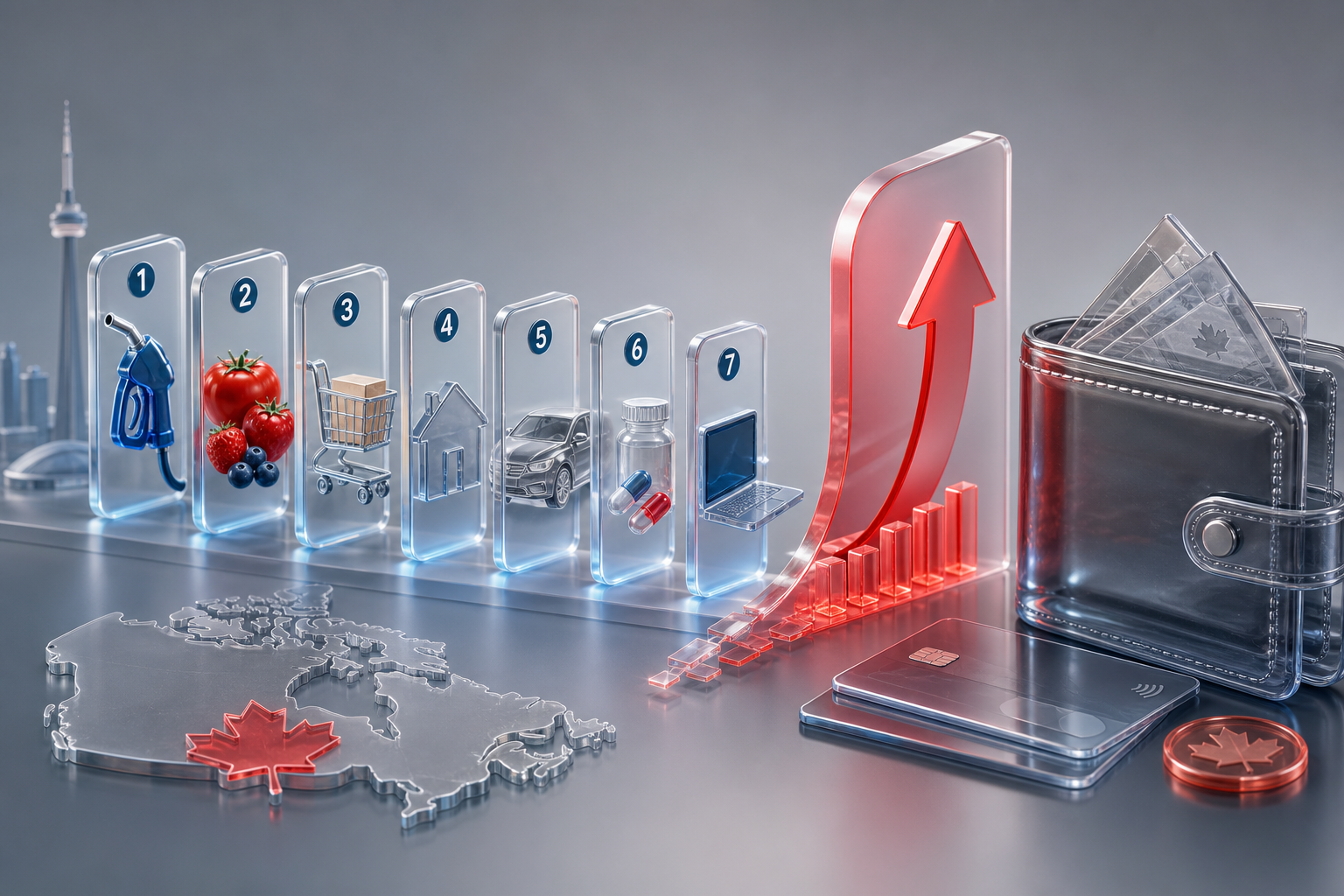

A 50% tariff on Canadian goods clears U.S. customs starting August 19, and the sticker shock won't wait for the nightly news to explain it. Groceries first, then energy, then everything else with a cross-border supply chain longer than three steps. Here's what rises and what you do this week.
Seven things getting more expensive
1. Gasoline jumps 15-25 cents per litre within 72 hours
Canada supplies roughly 60% of U.S. crude oil imports. A tariff this size acts as an immediate consumption tax on energy. Expect pump prices to spike the week of August 19. Retailers price fuel on replacement cost, not inventory cost, so even gas already in the ground station tanks will reprice upward.
2. Fresh produce climbs 20-30% by early September
Ontario greenhouse tomatoes, British Columbia blueberries, Quebec strawberries, all cross the border daily in refrigerated trucks. The tariff hits the grower, who passes it to the distributor, who passes it to the retailer. Expect $6.99 for a pint of blueberries that cost $4.49 in July.
3. Softwood lumber adds $8,000, $12,000 to new home costs
Canadian softwood represents roughly one-third of U.S. lumber supply. A 50% tariff on framing lumber alone raises the material cost of an average single-family home by four figures. Builders price forward, anyone breaking ground in Q4 2026 pays the tariffed rate even if lumber was ordered before August 19.
4. Prescription drugs from Canadian pharmacies become unviable
Many Americans buy insulin, inhalers, and maintenance drugs through licensed Canadian online pharmacies at 40-60% below U.S. retail. A 50% tariff wipes out the arbitrage. A three-month supply of Lantus that cost $180 from a Vancouver pharmacy will now land closer to $270 after the tariff, removing most of the savings.
5. Your next car costs $1,200, $3,500 more
Automotive parts cross the Canada-U.S. border up to seven times before final assembly. Steel stampings, wiring harnesses, seats, and electronics all carry compounding tariff exposure. The Detroit Three and Toyota assemble vehicles on both sides of the border using the same supply base. Tariffs don't stay in Canada, they embed in every vehicle with North American content.
6. Aluminum cans, beer, and canned goods all rise
Canada is the largest foreign supplier of aluminum to the U.S. Beverage cans are nearly pure aluminum. A 50% tariff on smelted aluminum raises the cost of every Coke, every Molson, every Campbell's soup can. Expect 8-12% retail price increases on canned and bottled goods by October.
7. Fertilizer costs spike, raising food prices six months later
Saskatchewan produces roughly 30% of global potash, a key crop nutrient. Tariffed potash raises input costs for U.S. corn, soy, and wheat farmers in spring 2027, which flows through to bread, meat (via feed costs), and processed foods by late 2027. This one has a lag, but the impact is large.
Four moves to make before August 19
1. Fill your vehicle's gas tank on August 18
Pump prices reprice overnight. A full tank bought pre-tariff saves $12, $18 compared to filling the same tank on August 20.
2. Stock your freezer with Canadian protein and produce this week
Ground beef, pork chops, frozen berries, anything with a country-of-origin label reading Canada. Retailers haven't repriced inventory yet. Frozen goods bought in early August reflect pre-tariff wholesale costs.
3. Prepay your 90-day prescription refills through a Canadian pharmacy before August 15
If you already use a cross-border pharmacy, place your next three orders now. Once the tariff hits, the price advantage disappears. Lock in July pricing while the window is open.
4. Defer any major purchase with embedded aluminum or steel until clarity emerges
New appliances, metal roofing, replacement windows, anything heavy in tariffed materials. Prices will rise, but there's a 30-60 day lag while channel inventory clears. If the tariff gets negotiated down or exemptions are granted, waiting costs you nothing. If it sticks, you've lost six weeks, not six months.
The tariff is a tax, and taxes show up in prices faster than policy gets reversed.
Read Next
Canada Lost 55,000 People This Quarter, So Why Aren't Home Prices Following?
CRA's New Billion-Dollar Ruling Program: How to Lock in Tax Certainty Before You Build
Why Porting Your 2.7% Mortgage Could Cost You $47,000 More Than Breaking It
Why Your Mortgage Renewal Is Making Crypto Look Smart (And What That Tells You)